Agentic Enterprise / HEADLESS 360
Signal-ready CX: Pairing Salesforce Agentforce with the Model Context Protocol
Actionable guidance for enterprise leaders: pair Salesforce Agentforce with the Model Context Protocol to make agent deployments observable, portable, and governed. Includes a concrete 90‑day pilot decision and operational checklists.
THE DECISION PATH
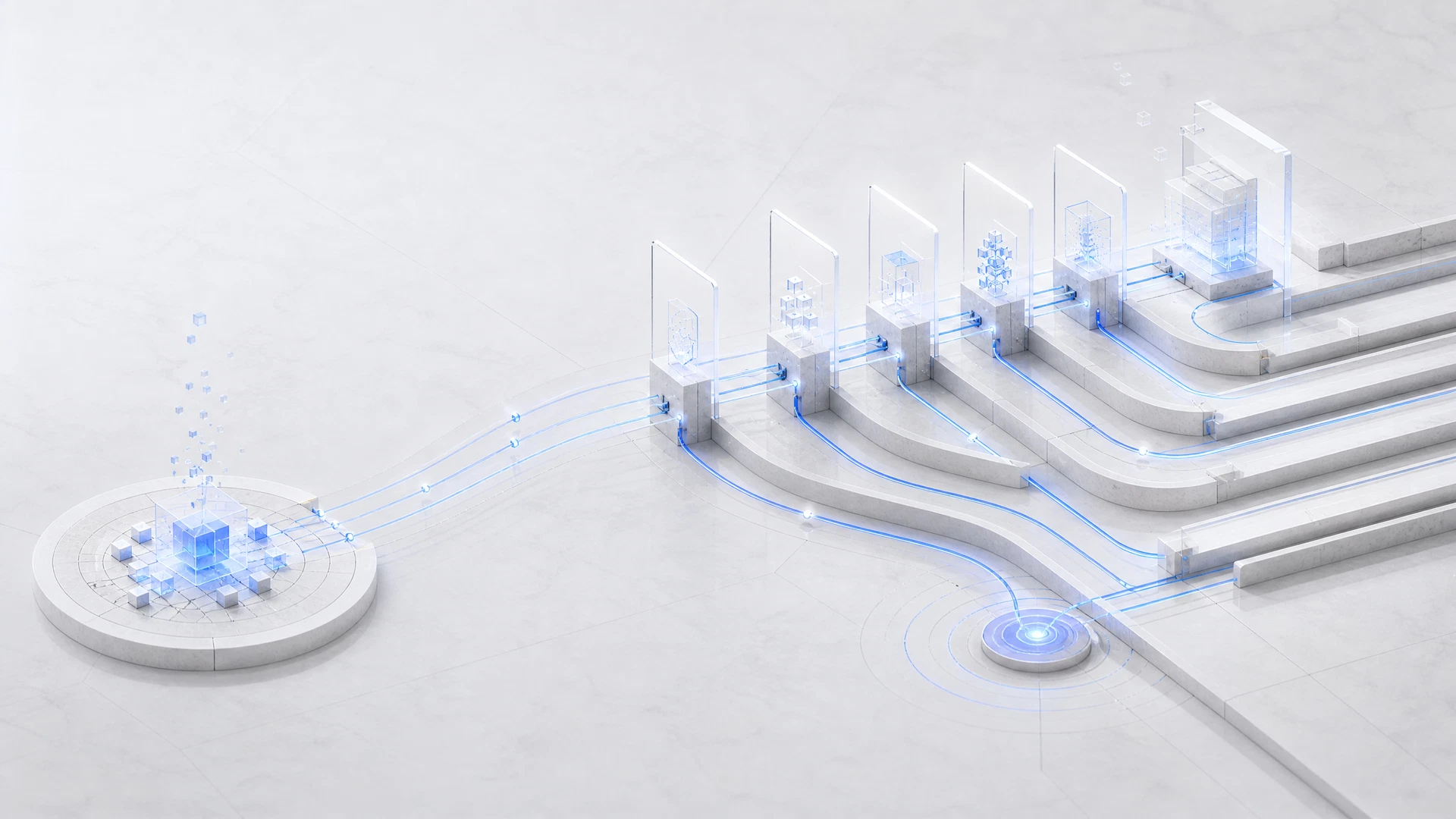
Agentic Enterprise / operating model- 01Workflow
- 02Context
- 03Control
- 04Evidence
# Signal-ready CX: Why your next enterprise decision should pair Salesforce Agentforce with MCP
Enterprises wrestling with agentic AI need two things to move from experiments to dependable operations: a platform that unifies humans and agents in customer workflows, and a standard that makes context portable, discoverable, and auditable. The dossier you provided points to a clear, actionable choice: evaluate Agentforce as the agent orchestration layer and adopt the Model Context Protocol (MCP) as the context-exchange standard that keeps agent actions grounded in enterprise data and controls.
This Insight explains what that combination buys you, the specific operational changes to approve now, and a pragmatic 90‑day pilot decision you can act on this quarter.
What the sources say (in plain terms)
- Salesforce Agentforce positions itself as a platform that "brings humans with agents together" across sales, service, marketing, and industry clouds. It is presented as a full stack: Builder, Voice, Dev Tools, AgentExchange, and operational tooling for running agents in production. (Source: Salesforce Agentforce support).
- The Model Context Protocol (MCP) is a transport-agnostic, JSON-RPC–based protocol for sharing context between AI hosts and context servers. MCP clearly separates a data layer (discovery, tools, resources, prompts, notifications) from a transport layer (stdio for local integrations; Streamable HTTP for remote servers with OAuth and bearer tokens). MCP is explicitly designed to let applications discover capabilities, request tools, and subscribe to notifications in a consistent, versioned way. (Source: MCP architecture documentation).
Taken together: Agentforce can run and orchestrate agents; MCP is a standard that can make the context those agents use portable, observable, and auditable across your stack.
The Headless 360 operating-model point of view
Headless 360 recommends an operator-first approach: treat agents as line-of-business applications that must be observable, governed, and able to swap context providers without rewriting agent logic. That means:
- Standardize on MCP as the enterprise context-exchange layer so Agentforce agents (and any other agent runtime) discover and use the same tools, resources, and prompts.
- Run context providers in a mix of local (stdio) and remote (Streamable HTTP) topologies depending on data sensitivity and latency constraints. Use local MCP servers where PII or regulated data forbid remote endpoints; use Streamable HTTP with OAuth where integration breadth matters.
- Use Agentforce’s Builder and AgentExchange to package agent behaviors, and let MCP manage the runtime binding to enterprise resources (databases, CRM records, billing systems) so the same agent can be validated in staging and then pointed at production context servers.
This operating model reduces blast radius: agent logic is stable and reviewable; context access and versions are controlled by MCP servers; transport choices enforce security boundaries.
A concrete decision to make this week (recommended)
Approve a 90‑day, risk‑bounded pilot with three goals: 1) prove secure context exchange between Agentforce agents and an MCP server, 2) validate observability and notification workflows, and 3) prepare governance controls for scaling.
Scope and deliverables
- Team: 1 product owner, 1 platform engineer, 1 security engineer, 1 contact-center SME, and a Salesforce Agentforce builder/implementer.
- Environment: dedicated sandbox Agentforce workspace + a local MCP server instance (stdio transport) and a Streamable HTTP MCP server endpoint for non-sensitive integrations.
- Deliverables: (a) working Agentforce agent that uses MCP discovery to locate a tool/resource (for example: a customer profile resource) and emits a notification back to the system; (b) an audit trail showing discovery and tool-execution events; (c) a short playbook for transport selection (stdio vs Streamable HTTP) and OAuth token issuance.
- Acceptance criteria: able to demonstrate end-to-end request/response and notifications where the MCP server enforces versioned resources and the Agentforce agent performs a human-in-the-loop escalation.
Why this is low risk and high value
- MCP explicitly supports both local stdio and Streamable HTTP transports so the pilot can start entirely local (minimal network exposure) and then exercise remote transport with OAuth.
- Agentforce already frames agents as working together with humans and platform components (Builder, Voice, AgentExchange), so the pilot is primarily a systems-integration test rather than a major replatform.
Implementation checklist (technical)
- Spin up an MCP reference server (local) and register a simple resource and a tool: discovery metadata should include capability versioning.
- Build an Agentforce agent bundle (Builder) that calls MCP discovery at startup and requests the registered tool.
- Instrument notification subscriptions so platform telemetry captures tool execution, progress, and completion events.
- Define an escalation path: when the agent’s confidence or an MCP notification indicates ambiguity, hand off immediately to a human operator in Agentforce Voice.
- Run security review: prefer stdio for any flow touching regulated data; require OAuth and token rotation for Streamable HTTP endpoints.
Organizational checklist (governance)
- Create a “context catalog” ownership model: each resource served by MCP must have a data owner, an access policy, and a versioning policy.
- Require an agent review board to sign off on tool contracts (inputs, outputs, failure modes) before deployment.
- Define SLAs for discovery and tool-execution latency in production to avoid agent stalls.
Concise FAQ
Q: What is MCP and why does it matter?
A: MCP is a JSON-RPC–based protocol that standardizes discovery, tools, resources, prompts, and notifications between AI hosts and context servers. It makes context portable and versioned so agents can be validated and pointed at different data providers without code changes. (See MCP architecture docs.)
Q: How does this fit with Agentforce?
A: Agentforce is the agent orchestration platform (Builder, Voice, AgentExchange, Dev Tools). MCP sits beneath agent runtimes as the context-exchange contract—Agentforce agents can call MCP-discovered tools/resources to access enterprise context safely. (See Agentforce support page.)
Q: Is this secure?
A: MCP supports local stdio transport for single-machine, low-risk deployments and Streamable HTTP with OAuth/bearer tokens for remote servers. Use stdio for regulated data and Streamable HTTP with strict token policies for broader integrations.
Q: How long to value?
A: A focused 90‑day pilot should validate discovery, tool execution, notifications, and human escalation patterns. After that, expand by cataloging resources and adding governance gates.
References
- https://www.salesforce.com/agentforce/mcp-support/
- https://modelcontextprotocol.io/docs/learn/architecture
HEADLESS 360 OPPORTUNITY SESSION
Bring one workflow.
Leave with a clearer move.
KEEP READING