
Agentic Enterprise / HEADLESS 360
MCP and Headless 360: a pragmatic decision roadmap for Agentforce deployments
A practical, phased decision framework for enterprises to integrate Model Context Protocol (MCP) with Salesforce Headless 360 and Agentforce: start local for sensitive systems, standardize capabilities, then expand remote for shared services.
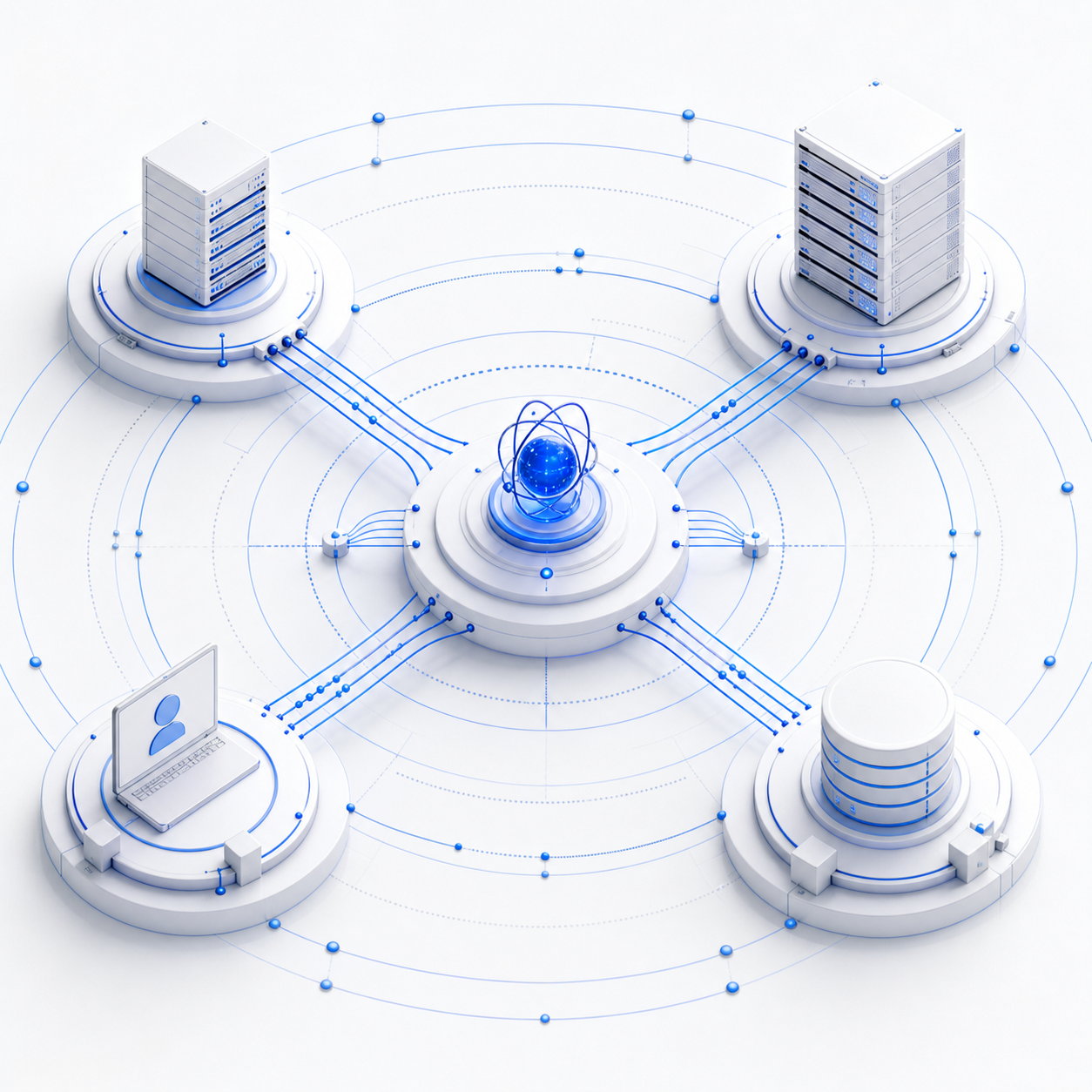
THE DECISION PATH
Agentic Enterprise / operating model- 01Workflow
- 02Context
- 03Control
- 04Evidence
# Integrating MCP with Headless 360: a practical roadmap for enterprise Agentforce deployments
Enterprises adopting Salesforce Agentforce and Headless 360 face a recurring operational question: how do you reliably deliver the right context to AI agents where and when they act? The Model Context Protocol (MCP) defines a composable, transport-agnostic way to present tools, resources, prompts and real‑time notifications to AI hosts. Salesforce’s Headless 360 references MCP support as a mechanism to connect Agentforce components to platform context and runtime services. Together they offer a practical path to make agents safe, auditable, and business-aligned — but only if you design for security, discovery, and operational resilience from day one.
This Insight strips theory down to a concrete decision: adopt an MCP-first integration pattern for Headless 360 Agentforce projects, starting with local MCP gateways for sensitive systems and a phased rollout to remote, streamable HTTP servers for shared services.
Why choose MCP for Headless 360 + Agentforce
- MCP separates the "what agents need to know" (context) from "how agents are run" (LLM hosts). That separation maps cleanly to Headless 360’s platform intent — build and customize Agentforce and Customer 360 with modular platform services. (See Salesforce Headless 360 / Agentforce MCP support.)
- MCP defines concrete primitives developers need: discovery, tools, resources, prompts, and notifications. Using those primitives avoids ad‑hoc APIs and accelerates agent reusability across Sales, Service, and vertical clouds. (See Model Context Protocol architecture overview.)
- Transport flexibility (stdio for local, Streamable HTTP for remote) lets you choose the least‑privilege deployment model for each context source — essential when combining customer PII systems, third‑party connectors, and shared analytics.
Sources: Salesforce Headless 360 Agentforce MCP support; Model Context Protocol architecture documentation.
The concrete decision: start local, expand remote
Recommended course of action for enterprise decision-makers preparing a Headless 360 + Agentforce rollout:
- Proof of value (30–60 days)
- - Run a single pilot where Headless 360 connects to a local MCP server using stdio transport. Use this for the highest‑sensitivity data (CRM records that include PII). Local MCP keeps context exchange off the network and simplifies compliance reviews.
- - Limit the pilot to one Agentforce use case (for example: service-case summarization or employee agent for legal review) and instrument discovery, tool execution, and notifications for observability.
- Harden and standardize (60–120 days)
- - Define an MCP capability matrix: which data sources expose resources, which tools are allowed to execute actions, which prompts are shared, and which notifications are permitted.
- - Formalize authentication: adopt OAuth for remote MCP tokens where required and establish short‑lived credentials for any streamable HTTP transport. MCP recommends OAuth for tokens in remote scenarios.
- Phase to hybrid production (120–240 days)
- - For non‑sensitive shared services (knowledge graph, catalog data, analytics), deploy MCP servers that use the Streamable HTTP transport to serve multiple MCP clients at scale.
- - Maintain local MCP servers for systems with strict residency or latency needs.
- Operations and lifecycle
- - Treat MCP servers as first-class platform components: deploy them with versioning, capability discovery endpoints, and CI/CD promoting new tools/resources through test → staging → prod.
- - Use MCP notifications to drive real‑time updates to agent sessions rather than polling.
Implementation checklist (minimum viable governance)
- Inventory: catalog data sensitivity, latency requirements, and which Agentforce components need read vs. write privileges.
- Topology: map which contexts will run on local stdio MCP servers and which will be exposed via Streamable HTTP.
- Auth: require OAuth tokens for remote MCP servers; enforce short token TTLs and rotate keys automatically.
- Discovery policies: require servers to declare capabilities and versions in discovery endpoints; only register MCP clients that match declared compatibility.
- Observability: log discovery calls, tool executions, and notifications; retain logs long enough for audit and incident investigations per your compliance rules.
Risks and mitigations
- Risk: uncontrolled tool execution could allow agents to take unsafe actions.
- - Mitigation: use MCP’s tool primitives and a capability matrix so only explicitly permitted tools are discoverable to a client.
- Risk: data exfiltration from remote MCP servers.
- - Mitigation: keep PII and sensitive resources on local stdio MCP servers; require OAuth and network controls for any remote server.
- Risk: version mismatch between MCP host and servers.
- - Mitigation: enforce discovery and capability negotiation during connection and maintain a rolling upgrade schedule; treat MCP servers as versioned services.
Headless 360 operating-model point of view
Headless 360 sees MCP as the "context fabric" — the standardized lane through which agents ask for and receive the data and verbs they need. From an operating-model standpoint:
- Platform teams must own MCP server lifecycles and the capability catalog. Business lines own the prompt and tool policy definitions within that catalog.
- Treat MCP discovery as the gate: no server declaration, no production access. This centralizes trust decisions without centralizing data.
- Enforce environment isolation: staging vs. prod MCP endpoints, and per‑environment OAuth scopes. This keeps experimentation fast while protecting customers.
- Use Agentforce Dev Tools and AgentExchange to package approved tools and skills; deploy them behind MCP servers to ensure traceable execution.
This approach aligns Headless 360’s modular platform goals with practical, auditable control over what agents can see and do.
Deployment patterns (examples)
- Local gateway pattern (highest trust): Headless 360 connects to a local stdio MCP server hosted inside the same VPC or on‑prem process. Use for CRM, ERP, and PII.
- Shared service pattern (scalable read): Streamable HTTP MCP servers publish catalogs, knowledge stores, and analytics outputs to multiple Agentforce instances.
- Hybrid action pattern: discovery and read resources served remotely; write actions (billing adjustments, data changes) routed through a local MCP server that requires stricter approvals.
FAQ (concise)
Q: Do we have to rewrite existing APIs to use MCP?
A: Not necessarily. MCP acts as a context layer — you can wrap existing APIs with MCP servers that expose tools/resources without changing backend services.
Q: Which transport should we prefer first?
A: For initial pilots and sensitive data, prefer local stdio transport. For shared, multi‑client services, adopt Streamable HTTP with OAuth.
Q: How does MCP affect compliance audits?
A: MCP’s discovery and capability declarations create clear artifacts you can review: which tools exist, which clients can see them, and which notifications are emitted.
Q: Will this block agent innovation?
A: No — a capability catalog and AgentExchange packaging let teams innovate while platform owners enforce safety via discovery policies.
References
- Salesforce — Agentforce MCP support (Headless 360 platform and Agentforce product pages). https://www.salesforce.com/agentforce/mcp-support/
- Model Context Protocol — Architecture overview (data & transport layers, discovery, primitives, and transport choices). https://modelcontextprotocol.io/docs/learn/architecture
HEADLESS 360 OPPORTUNITY SESSION
Bring one workflow.
Leave with a clearer move.
KEEP READING


