
Agentic Enterprise / HEADLESS 360
Deploy MCP-first Agentforce Integrations: A Headless 360 Playbook
A Headless 360 playbook to pilot MCP-first Agentforce integrations: a 90-day decision and runbook to expose enterprise systems as discoverable, governable context servers for production agents.
THE DECISION PATH
Agentic Enterprise / operating model- 01Workflow
- 02Context
- 03Control
- 04Evidence
# Executive decision: Build MCP-first Agentforce connectors now
Enterprises moving from experimentation to production with agentic AI face a narrow technical fork: stitch proprietary connectors into monolithic chat wrappers, or adopt a standards-first context layer so agents can safely access live enterprise systems. The Model Context Protocol (MCP) and Salesforce Agentforce product family together make a practical, low-risk route to the latter. This Insight gives a concrete decision and a 90-day pilot plan for IT and automation leaders who must deliver production-grade agents without locking the organisation into brittle integrations.
Why this decision matters
- Agentforce positions "humans with agents" as an integrated product set (Builder, Voice, Dev Tools, AgentExchange, Operations) for enterprise workflows. The product surface is designed to bring agents into sales, service, marketing and operations while leaning on the Salesforce platform. (source: Salesforce Agentforce product pages)
- MCP is a focused protocol for exchanging context between AI hosts and context servers. It defines a JSON-RPC data layer (tools, resources, prompts, notifications) and two transports (stdio for local, Streamable HTTP for remote). The MCP spec explicitly supports capability discovery, tool execution semantics, and recommends OAuth for authentication. (source: Model Context Protocol architecture docs)
Taken together, Agentforce as the agent runtime and MCP as the context exchange protocol let you separate runtime (agents) from stateful context providers (connectors, databases, ERP, file stores) in a controlled, auditable way. That separation is exactly what Headless 360 recommends for predictable, governable AI at scale.
Headless 360 operating-model point of view
Headless 360's operating model treats the agent as the execution runtime and context sources as headless services that publish capabilities. We recommend an MCP-first posture for all new agent builds that will access enterprise systems. Concretely:
- Treat each system-of-record connector as an MCP server that exposes a minimal, well-documented set of tools and resources (read-only where possible).
- Use MCP discovery to enumerate capabilities programmatically and keep the agent's permission surface small.
- Prefer stdio transport for single-host, latency-sensitive connectors (on-prem or co-located), and Streamable HTTP for remote, multi-tenant context services where standard HTTP auth and SSE streaming simplify operations.
- Centralize auth and audit (OAuth tokens issued through your SSO) so tokens in MCP transport are short-lived and reissued through existing identity infrastructure.
This model minimizes blast radius, enables explicit capability governance, and accelerates iteration: new MCP servers are discovered rather than hard-coded into agents, which reduces integration friction and makes rollbacks safer.
The concrete decision (do this in the next 30 days)
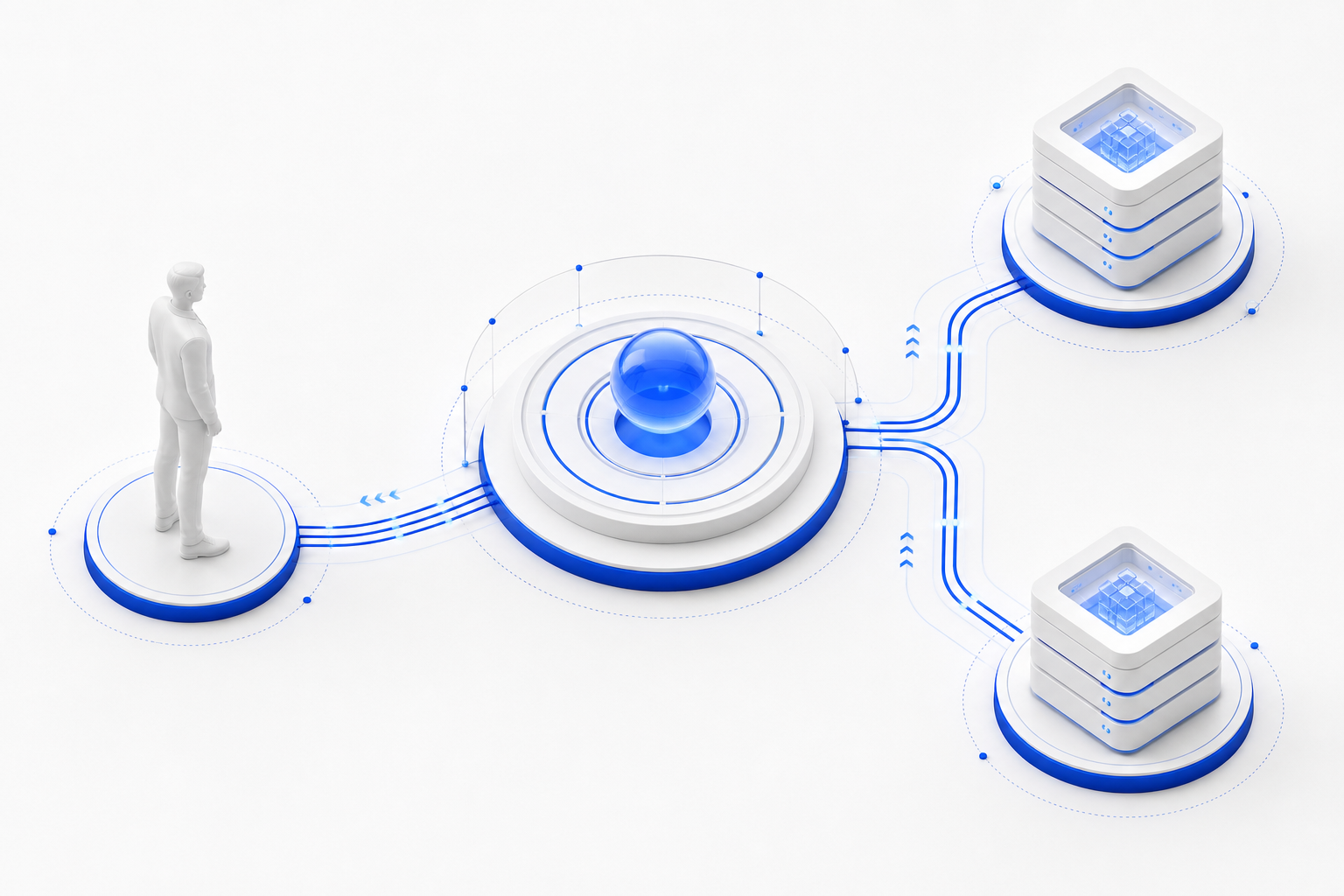
Authorize a 90-day pilot that delivers a single, production-representative Agentforce workflow backed by two MCP servers: one local (stdio) connector to an internal system-of-record and one remote (Streamable HTTP) connector to a cloud data service.
Minimum viable scope for the pilot:
- Select a single high-value workflow (example: case enrichment for service agents using CRM data). Use Agentforce Builder to model the agent's decision points and handoffs to humans.
- Implement an MCP server for the internal system-of-record (readonly toolset exposing lookup and metadata). Deploy it as a local stdio server to minimize network dependencies and prove low-latency access.
- Implement or reuse a remote MCP server that exposes a limited set of analytics or catalog capabilities over Streamable HTTP. Use OAuth tokens for authentication as recommended by MCP.
- Configure Agentforce Dev Tools to connect to both MCP servers; confirm capability discovery and tool execution flows.
- Run a bounded production pilot (limited users, real traffic window) with monitoring on tool invocations, latencies, and permission errors.
Decision criteria to validate at 90 days:
- Agents can discover and call only the expected MCP tools (discovery logs match expected capabilities).
- No severe data-exfiltration incidents; audit logs show only allowed tool outputs.
- Latency SEV rate is acceptable for the workflow (use the stdio server for sub-100ms goals).
- Operational playbooks exist for token revocation, server rollout, and rollback.
If these are met, approve a phased rollout across two additional workflows in the next 120 days.
Implementation checklist (technical and governance)
- Inventory the minimal set of operations each target system must expose as MCP tools. Default to read-first APIs.
- Build MCP servers using language SDKs where available; follow the MCP data-layer primitives (tools, resources, prompts, notifications).
- Select transport per connector: stdio for local, Streamable HTTP for remote. Use OAuth for token issuance and rotate tokens on schedule.
- Add audit hooks to capture discovery and execution requests and responses (redact PII from logs at source).
- Integrate Agentforce operations tools for lifecycle and rollback. Keep a human-in-loop gating policy for any tool that writes back to systems.
Risks and mitigations
- Risk: Overexposing capabilities to agents. Mitigation: Use MCP discovery to enumerate, then apply allowlists; implement least-privilege tokens.
- Risk: Latency from remote context servers impacting UX. Mitigation: Use stdio-hosted MCP servers for latency-sensitive paths and instrument retries/timeouts.
- Risk: Misaligned governance between platform and business units. Mitigation: Run the pilot as a cross-functional program with clear success criteria and joint sign-off.
Headless 360 recommended success metrics (operational, not ROI)
- Discovery-compliance: percentage of calls where agents used only discovered tools.
- Time-to-first-success: time from agent invocation to a verified human handoff or task completion for the pilot workflow.
- Audit completeness: percentage of tool calls with full audit metadata retained per policy.
Do not use these as marketing metrics; use them to operationalize safe rollouts.
FAQ (concise)
Q: Must we rewrite existing connectors to be MCP servers?
A: No. You can wrap existing APIs with a thin MCP server adapter that exposes only the specific tools you need.
Q: Which transport should we choose first?
A: For single-host, latency-sensitive connectors choose stdio. For shared remote services, choose Streamable HTTP. Both are supported by the MCP architecture.
Q: How should authentication be handled?
A: MCP recommends OAuth for authentication. Use your existing identity provider to issue short-lived tokens and integrate token rotation into your DevOps pipeline.
Q: Can Agentforce consume MCP servers today?
A: Agentforce provides Dev Tools and platform integration points; the recommended pilot uses Agentforce Dev Tools to connect to MCP servers that expose discovered capabilities. (source: Salesforce Agentforce product pages)
References
- https://modelcontextprotocol.io/docs/learn/architecture
- https://www.salesforce.com/agentforce/mcp-support/
HEADLESS 360 OPPORTUNITY SESSION
Bring one workflow.
Leave with a clearer move.
KEEP READING


