Agentic Enterprise / HEADLESS 360
Approve a 90‑day MCP + Agentforce pilot: a practical path to governed agentic AI
A decision‑focused briefing recommending a 90‑day pilot that pairs Model Context Protocol (MCP) servers with Salesforce Agentforce developer tooling to validate governed, low‑latency context for enterprise agents.
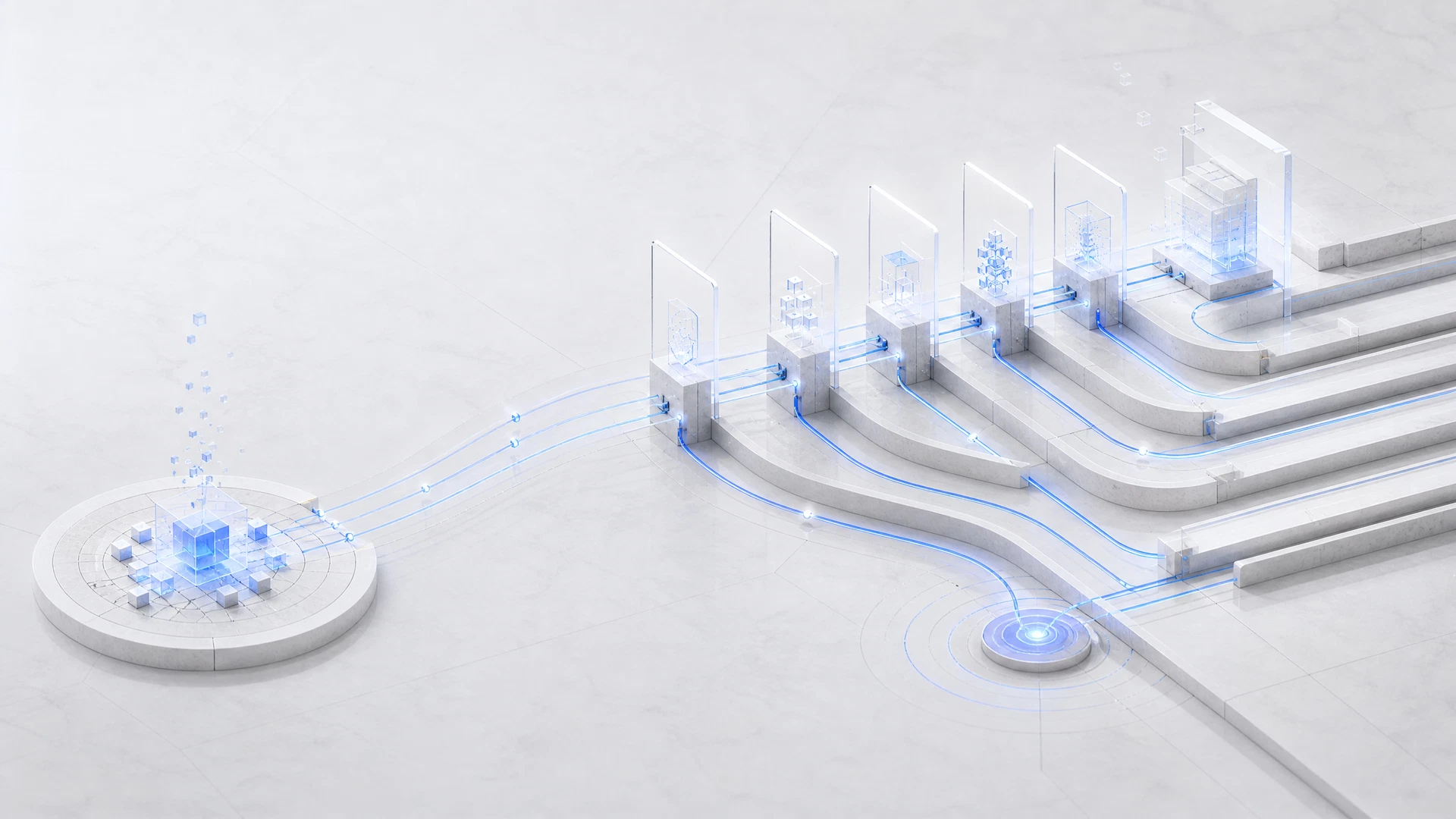
THE DECISION PATH
Agentic Enterprise / operating model- 01Workflow
- 02Context
- 03Control
- 04Evidence
# Why enterprises should pilot MCP now with Salesforce Agentforce
Enterprises that plan to operationalize agentic AI this year face a practical integration problem: agents need reliable, current context from your systems and a safe, observable channel to act. The dossier you provided points to two complementary primary sources: Salesforce’s Agentforce MCP Support page (which groups developer tooling, a headless toolkit, Agentforce Builder, and partner/AgentExchange options) and the Model Context Protocol (MCP) architecture documentation (which defines how context is exchanged between MCP hosts and MCP servers, and describes transports and primitives). Together they describe a pragmatic path: treat MCP as the integration standard and treat Agentforce as the execution and management surface. That combination lets you move from experiments to governed pilots without re‑engineering every service or locking your data into a single model runtime.
This Insight gives a concise enterprise decision (approve a 90‑day MCP + Agentforce pilot), a practical implementation checklist, the Headless 360 operating‑model point of view, and a short FAQ for executives.
Executive decision (concrete)
Approve a 90‑day pilot with these explicit outcomes and acceptance criteria:
- Objective: Validate that Agentforce can consume MCP context from at least two internal MCP servers (one local/stdio and one remote/HTTP) and that agents improve a measurable business process (example: reduce average contact‑to‑resolution time or lower manual handoffs by X%).
- Deliverables: (a) MCP server(s) deployed and registered to Agentforce; (b) one production‑connected Agentforce agent (sales or service) using MCP context; (c) observable audit logs for every context exchange; (d) a decision playbook for go/no‑go.
- Acceptance criteria (example thresholds to set now): evidence of end‑to‑end context delivery within latency targets (e.g., <200ms median per query for local paths; configurable for remote), security posture validated (OAuth or equivalent), and documented improvement in the chosen KPI.
Rationale: The MCP architecture is explicitly designed to separate context servers from LLM decisioning, supporting both local (stdio) and remote (streaming HTTP) transports and JSON‑RPC semantics. Salesforce’s Agentforce materials group developer tooling, headless capabilities, and partner integrations—indicating Agentforce is positioned to be the orchestration surface for agents and connectors. A focused pilot reduces integration risk while producing measurable evidence for scale decisions.
What to do in the 90‑day pilot (stepwise)
- Sponsor & scope
- - Sponsor: CTO or VP of Automation. Define the KPI you want to influence and a one‑page charter.
- Inventory & target use case
- - Pick a tightly scoped process (contact center escalation, a sales assist workflow, or a returns decisioning flow). Limit initial scope to a single LOB and one agent persona.
- Deploy two MCP servers
- - Local MCP server (stdio) for on‑prem systems and worst‑case latency-sensitive context.
- - Remote MCP server (Streamable HTTP) for cloud data and partner feeds.
- - Use MCP SDKs and a reference server to shorten setup; keep the first server behind your network for security testing.
- Connect Agentforce
- - Register the MCP clients in Agentforce / developer tools and ensure the Agentforce headless toolkit can reach the MCP endpoints.
- Define and enforce governance
- - Authentication (OAuth recommended by MCP transport guidance), RBAC for context types, and logging/auditing for every context exchange.
- Observe & measure
- - Capture latency, success/failure rates, number of human handoffs avoided, and signal quality (relevance of context returned).
- Run a security and compliance review
- - Pen test the remote transport and validate data residency controls for the local server.
- Conclude with go/no‑go & rollup plan
- - If acceptance criteria are met, propose an 6‑12 month rollout plan with prioritized use cases.
Headless 360 operating‑model point of view
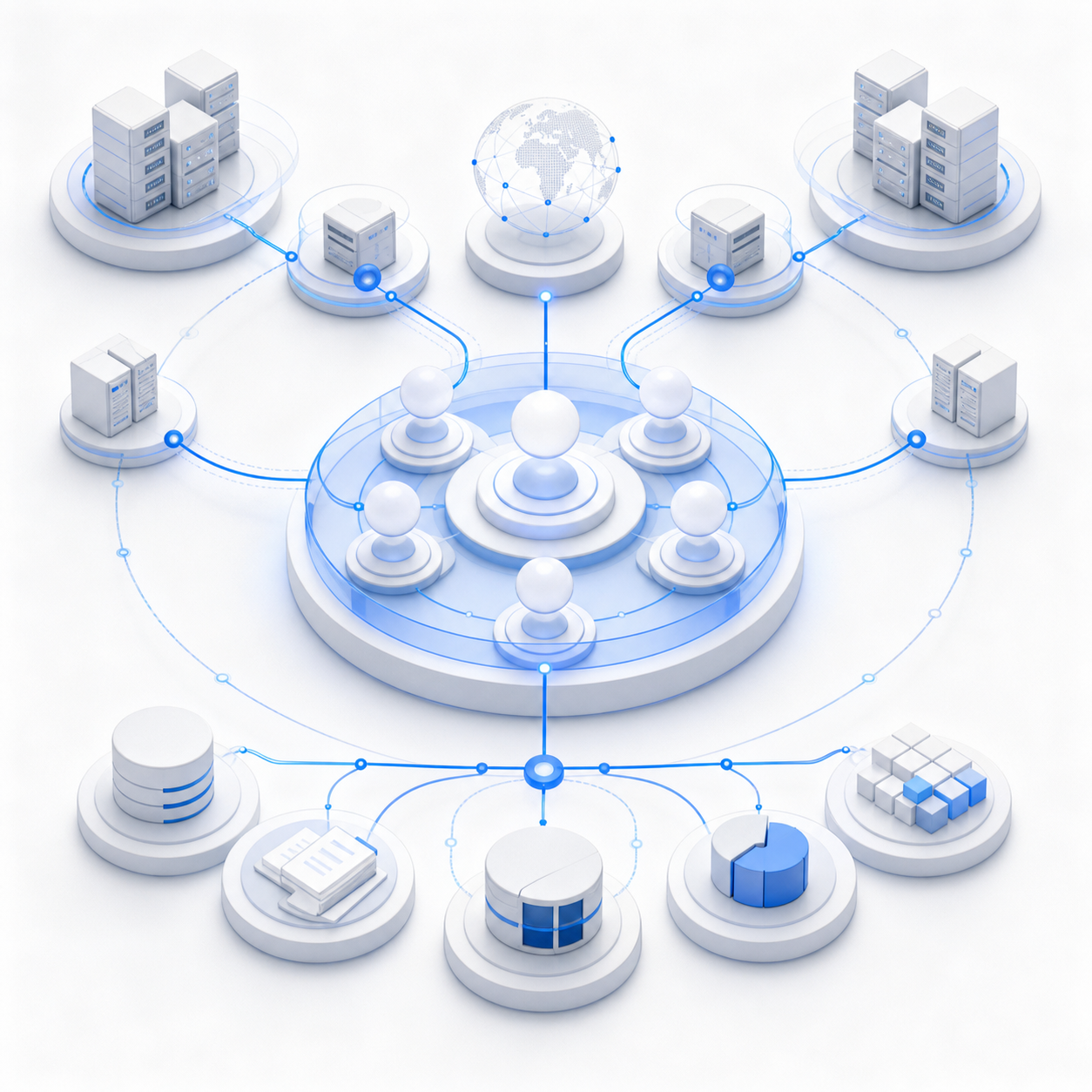
- Treat agentic systems as distributed services, not monoliths: separate context (MCP servers) from model execution (Agentforce agents). This reduces coupling and preserves options to change model vendors or tune runtimes.
- Start headless, then productize: run agents initially through a headless API surface (Agentforce headless toolkit) to capture telemetry and governance before adding UI integrations like Slack channels or contact center endpoints.
- Measure signals, not feelings: define 3 quantitative metrics (context latency, signal relevance, human handoffs avoided) and make them the pilot’s north star.
- Guardrails first, innovation second: implement authentication, RBAC, and audit logging at the outset. MCP’s transport choices and the Agentforce tooling surface both require explicit access control decisions.
Risks and mitigations
- Risk: Unexpected latency from remote context sources. Mitigation: use local MCP servers for latency‑sensitive context and cache stale signals with TTLs.
- Risk: Unclear ownership of context primitives. Mitigation: adopt a small catalog of named resources (MCP primitives) and hand ownership to specific teams.
- Risk: Data leakage when context travels to third‑party agents. Mitigation: redact or token‑map PII via an MCP server policy layer before exposure.
Quick pilot checklist (one page)
- Charter approved by sponsor
- Target KPI and baseline measured
- Local MCP server deployed and validated
- Remote MCP server deployed and validated
- Agentforce connection established via developer tooling
- OAuth or equivalent auth configured for transports
- Audit logging enabled for context exchanges
- Security review completed (network, app, and data controls)
- Pilot runbook and rollback plan completed
Concise FAQ
Q: Why use MCP instead of a direct API to Salesforce or an LLM vendor?
A: MCP formalizes how context is discovered, requested, and delivered to agents. That separation avoids re‑wiring every agent when you change model runtimes or swap vendors.
Q: Can MCP handle both local and cloud data?
A: Yes. MCP explicitly supports stdio (local process) and Streamable HTTP (remote) transports so you can keep sensitive data local while streaming non‑sensitive signals from the cloud.
Q: What does Agentforce bring to this stack?
A: The Agentforce materials bundle developer tooling, a headless toolkit, and partner integrations—making it a practical runtime and orchestration surface for agents that consume MCP context.
Q: How long before I know if this is worth scaling?
A: A focused 90‑day pilot with concrete KPI targets should give the evidence you need to decide on a broader rollout.
References
- https://www.salesforce.com/agentforce/mcp-support/
- https://modelcontextprotocol.io/docs/learn/architecture
HEADLESS 360 OPPORTUNITY SESSION
Bring one workflow.
Leave with a clearer move.
KEEP READING