
Agentic Enterprise / HEADLESS 360
Approve a 90‑day Headless 360 + MCP Pilot for Agentforce Context Governance
A decision-maker playbook recommending a 90-day pilot to integrate Headless 360 + Agentforce with a local MCP server (stdio transport) to control context, latency, and governance.
THE DECISION PATH
Agentic Enterprise / operating model- 01Workflow
- 02Context
- 03Control
- 04Evidence
# Today’s Insight — Operationalizing Agentic AI with Headless 360 and MCP
Enterprises adopting Agentforce and the Headless 360 platform face two immediate integration questions: how to give agents reliable, auditable context, and how to do so without creating new latency, security, or governance blind spots. The Model Context Protocol (MCP) and Salesforce’s Headless 360 product references in the dossier point to a concrete, low-risk path: start with a focused pilot that pairs Headless 360 + Agentforce with a local MCP server (stdio transport) and a defined escalation to Streamable HTTP for remote capabilities.
This piece gives a decision-makers playbook you can action this quarter: what to approve, how to measure success, and how the Headless 360 operating model should govern the program.
The core fact set (from the dossier)
- Salesforce’s Headless 360 is positioned as the platform for building and customizing Agentforce and Customer 360 integrations. The platform surface is explicitly referenced under Agentforce product pages as the place to assemble Agentforce, Customer 360, and platform capabilities. (Salesforce Agentforce MCP support).
- The Model Context Protocol (MCP) documentation describes a client-server architecture that separates a data layer (JSON-RPC primitives for discovery, tools, resources, prompts, and notifications) from a transport layer. MCP supports two transports: stdio (for local, same-machine servers with no network overhead) and Streamable HTTP (for remote servers, supporting HTTP auth patterns such as OAuth). The docs explicitly recommend stdio for local servers and Streamable HTTP for remote servers and explain the protocol’s primitives and notification features. (MCP Architecture Overview).
These two source pillars mean you do not need to invent a proprietary context exchange: MCP gives a standards-first way to present context; Headless 360 is the product surface to connect Agentforce to that context.
The concrete decision to approve today
Approve a 90-day pilot to integrate Headless 360 + Agentforce with an MCP-based local context server for one high-value use case (customer support for a defined product line or a single B2B account segment). The pilot should be scoped as follows:
- Scope: one product line or customer segment, one Agentforce deployment (service or sales agent), limited set of back-end data resources (CRM records, order history, and one system-of-record).
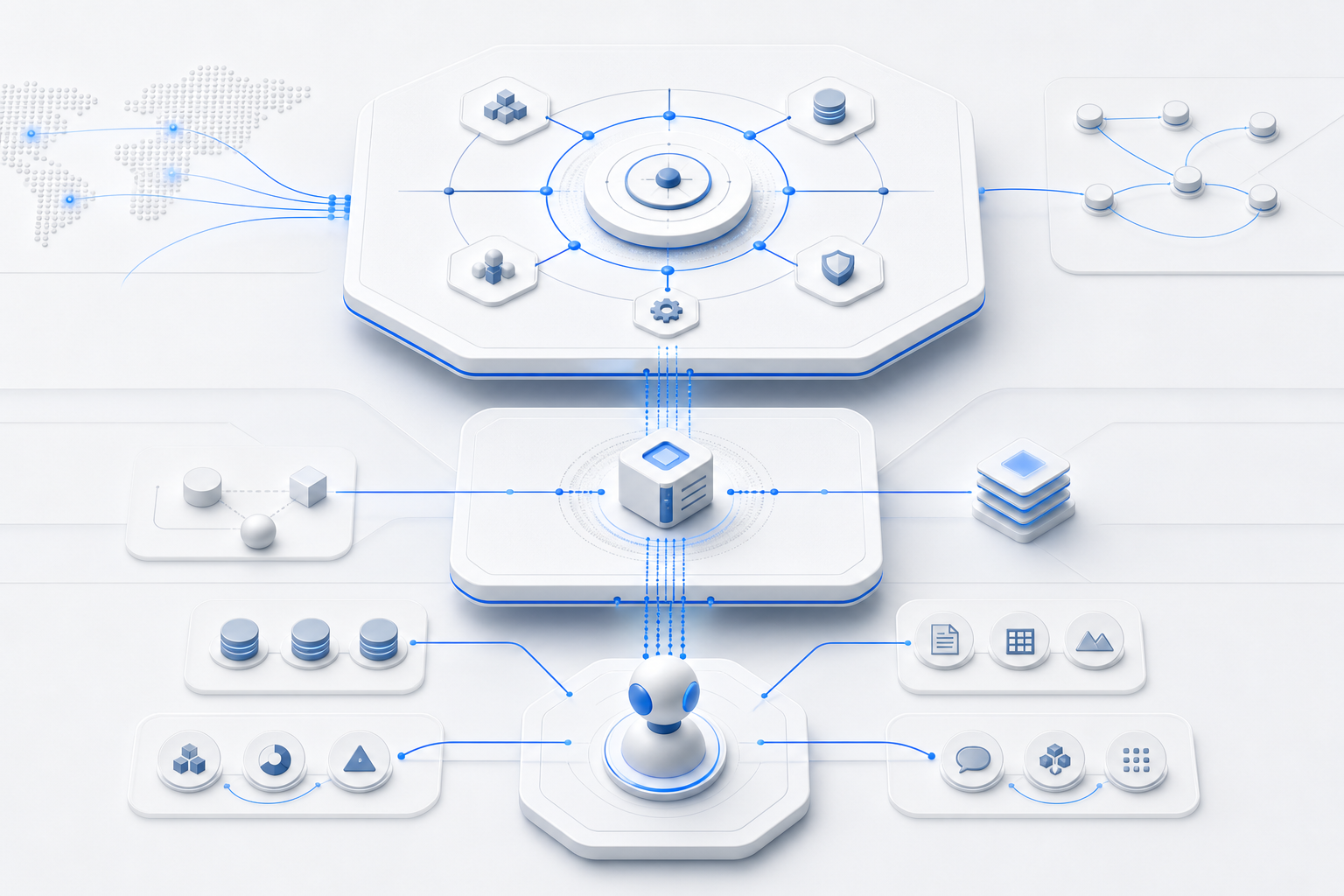
- Architecture: local MCP server using stdio transport to host the sensitive context layer; Headless 360 connects Agentforce to the MCP client; Agent actions use the MCP primitives for tool discovery and execution. Use Streamable HTTP only as a planned follow-up for non-sensitive or federated data sources.
- Security/Compliance: keep the local MCP server on-prem or within a VPC that complies with existing data policies; use the MCP recommendation of OAuth for any Streamable HTTP endpoints in follow-on pilots.
- Metrics (measured): tool discovery time, context retrieval latency, percentage of Agentforce turns that needed human escalation, and a governance checklist completion rate (data lineage, audit logging, permission model).
Why this is immediate and low-risk: MCP explicitly documents stdio for same-machine local servers and calls it optimal for performance with no network overhead; that lets you pilot a tightly controlled deployment without exposing production back-ends over HTTP. Headless 360 already surfaces Agentforce integration points, so this is primarily a wiring and governance exercise rather than building a new protocol. (Sources: MCP architecture; Salesforce Agentforce MCP support).
Execution checklist (30/60/90)
- 0–30 days: approve pilot, assign product owner and security owner, create architecture diagram showing Headless 360 → local MCP stdio server → staged data snapshot. Stand up a dev MCP server (reference SDKs) and a Headless 360 sandbox.
- 31–60 days: integrate a single Agentforce skill with the MCP tool discovery and resource primitives; validate prompt and notification flows; collect telemetry on tool discovery latency and per-turn context usage.
- 61–90 days: run a controlled pilot with business users, capture governance artifacts (audit logs, user consent flows), and prepare go/no-go report with the four metrics defined above.
If metrics meet thresholds (example thresholds to decide: context retrieval P95 < 200 ms, >80% of required context delivered without escalation, governance checklist 100% complete), approve expansion to multi-region and Streamable HTTP connectors for non-sensitive federated sources.
Headless 360 operating-model point of view
Headless 360 should be the product control plane for how the business governs agentic capabilities: a single catalogue of Agentforce agents, an integration registry that records which MCP servers and transports each agent uses, and a compliance fabric that enforces where Streamable HTTP may be used. Operational responsibilities must be split:
- Product/Business: owns the Agentforce skill definition, acceptance criteria, and business metrics.
- Platform/Cloud: owns the MCP runtime environment (local MCP images, container lifecycle, monitoring) and the Headless 360 configuration.
- Security/Privacy: approves transport choice (stdio vs Streamable HTTP), token lifecycle for remote MCP connections (OAuth), and the audit log retention policy.
Treat MCP servers as first-class platform components in Headless 360: every agent should declare which MCP server(s) it trusts and whether they are local (stdio) or remote (Streamable HTTP). That declaration then drives deployment, controls, and monitoring.
Risks and mitigations
- Risk: accidental exposure of sensitive context when moving to HTTP-based MCP transports. Mitigation: delay Streamable HTTP until governance pass is complete; require OAuth and per-resource ACLs.
- Risk: operational complexity of running multiple MCP servers. Mitigation: start with one local MCP server and make the registry and lifecycle automation part of the 90-day pilot deliverables.
Concise FAQ
Q: Why use a local MCP server instead of calling APIs directly from agents?
A: MCP’s stdio transport is documented as optimal for same-machine servers with no network overhead, which reduces surface area and gives you a single place to manage context primitives, discovery, and notifications. (MCP Architecture Overview).
Q: Is this mandated by Salesforce?
A: The dossier shows Headless 360 is the platform to build Agentforce integrations; MCP is a recommended protocol for context exchange. This is a platform-and-protocol alignment decision you can adopt to standardize agent context. (Salesforce Agentforce MCP support; MCP Architecture Overview).
Q: When should we use Streamable HTTP?
A: Use Streamable HTTP for remote MCP servers when you need federated context across networks; the MCP docs describe Streamable HTTP with standard HTTP authentication (OAuth) for that scenario.
Q: What success signals should we require to expand?
A: Clear telemetry showing acceptable context latency (P95 benchmark), a low escalation rate to humans, and a completed governance checklist (audit, ACLs, token lifecycle). Include a business KPI (e.g., reduced handle time or time-to-decision) as the executive tie-back.
References
- https://www.salesforce.com/agentforce/mcp-support/
- https://modelcontextprotocol.io/docs/learn/architecture
HEADLESS 360 OPPORTUNITY SESSION
Bring one workflow.
Leave with a clearer move.
KEEP READING


