
Agentic Enterprise / HEADLESS 360
Operationalizing Agentforce with MCP: a 6‑Month Decision Plan
A pragmatic 6‑month decision and implementation plan for enterprises to pilot Salesforce Agentforce with Model Context Protocol (MCP) partners, focusing on registry, transports, security, and measurable success criteria.
THE DECISION PATH
Agentic Enterprise / operating model- 01Workflow
- 02Context
- 03Control
- 04Evidence
# Operationalizing Agentforce with MCP: a 6‑Month enterprise decision plan
Enterprises now must choose not whether to use agentic AI but how to integrate it safely, reliably, and at scale. Salesforce’s Agentforce positions itself as the enterprise MCP client — a managed bridge between Salesforce agents and third‑party MCP servers — while the Model Context Protocol (MCP) provides the open standard for discovery, tools, resources, and prompts that make multi‑vendor agent ecosystems practical. (salesforce.com)
The decision you need to make this quarter
Do you run a tightly scoped, governed Agentforce + MCP pilot (3–6 months) that validates two production use cases and an MCP server registry before broad rollout — or do you proceed with piecemeal, bespoke integrations that will reintroduce the very silos Agentforce promises to solve? Headless 360 recommends the former: run a focused pilot with clear success criteria, a security gating plan, and production telemetry. This is actionable, fiscally bounded, and aligns with both Agentforce and MCP primitives. (salesforce.com)
Why this is now tractable
- Agentforce explicitly treats MCP as the interoperability layer that lets agents discover and use external resources, tools, and prompts — “think of it as USB‑C for AI.” That simplifies the integration contract for teams that historically built bespoke connectors. (salesforce.com)
- MCP is a lightweight, stateless JSON‑RPC based protocol with a data layer (primitives: tools, resources, prompts) and a transport layer (stdio for local; Streamable HTTP for remote), so implementation choices (local vs remote) are explicit and standardised. That reduces integration ambiguity during the pilot. (modelcontextprotocol.io)
Headless 360 operating‑model point of view
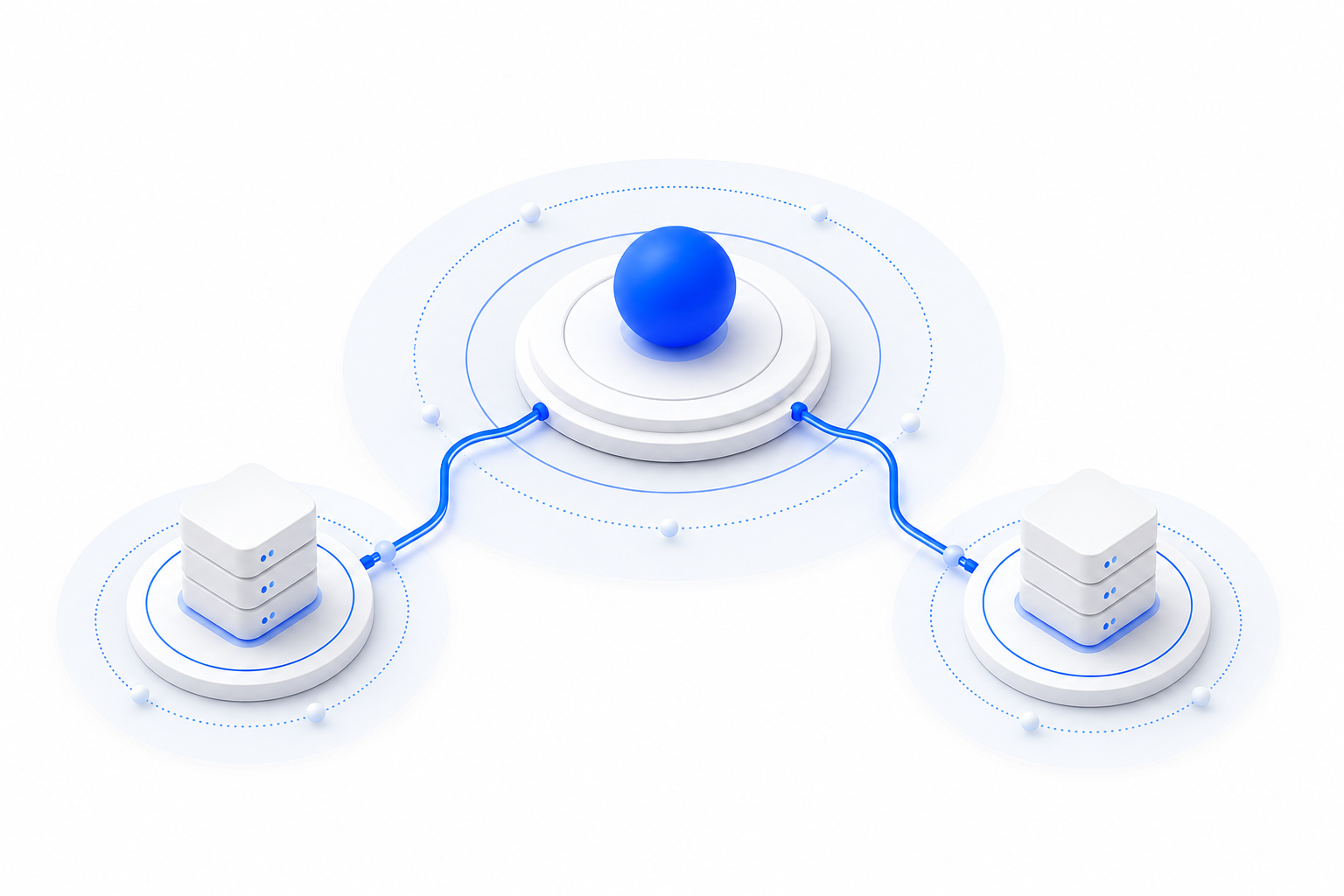
Treat Agentforce as a managed MCP host that sits at the orchestration layer; separate agent logic from front‑end experiences. Use a thin orchestration plane that:
- Centralizes discovery and authorization via an MCP server registry,
- Enforces policy and rate limits at the boundary (Agentforce/gateway), and
- Surfaces contextual resources to agents via MCP primitives rather than embedding data inside agents.
This operating model reduces long‑term engineering debt: agents remain lightweight and replaceable, while the enterprise controls trust, audit, and lifecycle centrally. The approach follows the explicit Agentforce and MCP design goals (enterprise registry, governance, and primitives). (salesforce.com)
Concrete 6‑month implementation plan (recommended)
Month 0 — Decision & scope
- Sponsor and success metrics: reduce average handle time for two support flows (billing and order tracking) and prove policy enforcement on external tools.
- Select two MCP servers to integrate (one internal data server + one vetted partner from AgentExchange). Agentforce provides discovery hooks you can use for a partner catalog. (salesforce.com)
Month 1 — Architecture & security
- Map data and action surfaces: classify what will be exposed as Resources (data reads), Tools (actions), and Prompts (templates) per MCP primitives. (modelcontextprotocol.io)
- Choose transports: use Streamable HTTP for remote partner MCP servers; use stdio for local, on‑prem servers where latency and data residency matter. MCP recommends these transport choices. (modelcontextprotocol.io)
- Security gating: require OAuth or token‑based auth for remote MCP servers; configure Agentforce’s centralized registry and granular access policies before any discovery is allowed. Agentforce emphasizes enterprise‑grade authentication and policy controls. (salesforce.com)
Month 2–3 — Build pilot connectors & registry
- Deploy a central MCP server registry (Agentforce supports a centralized registry concept) and register the two pilot servers. (salesforce.com)
- Implement minimal tool wrappers for the partner server (tool discovery + example tool execution flows) following the MCP JSON‑RPC patterns (server/discover, tool execution requests). Use reference SDKs or the MCP Inspector to speed delivery. (modelcontextprotocol.io)
Month 4 — Governance, testing, and UX
- Implement policy enforcement (rate limiting, allowed tools, data exfiltration rules) at the Agentforce gateway. Agentforce documentation explicitly calls out centralized controls and rate limiting as part of its AI agent gateway model. (salesforce.com)
- Run adversarial and privacy tests against the Resource and Tool surfaces.
- Validate UI flows (headless front ends or Slack) to ensure agents surface only approved prompts and resources.
Month 5–6 — Production readiness & rollout
- Run a live A/B test: operators using Agentforce+MCP vs. current toolset. Measure time to resolution, error rates, and policy violations.
- If success criteria met, expand registry to additional MCP partners and standardize onboarding. Use AgentExchange to source vetted MCP partners to avoid rework. (salesforce.com)
Governance & risk checklist (non‑exhaustive)
- Registry access controls and audit trails (mandatory). (salesforce.com)
- Per‑request metadata & versioning (MCP is stateless; include _meta per request). (modelcontextprotocol.io)
- Transport hardening: use TLS, OAuth tokens for Streamable HTTP and secure process controls for stdio. (modelcontextprotocol.io)
- Rate limits and circuit breakers at the Agentforce gateway to protect platform stability. (salesforce.com)
Operational telemetry you must capture
- Tool invocation counts and latencies (broken down by MCP server).
- Resource freshness and cache hit ratios (to detect stale data).
- Policy enforcement events (blocked tool calls, failed auth).
- User impact metrics (handle time, escalation rate, NPS delta).
Collect these via your existing observability stack; ensure MCP request/response IDs are propagated into logs for end‑to‑end tracing as MCP uses JSON‑RPC request/response patterns. (modelcontextprotocol.io)
What success looks like at month 6
- Two production use cases served by external MCP servers through Agentforce with no policy violations in a pilot window.
- 10–30% reduction in task completion time for the pilot flows (or a measurable reduction in bespoke integration engineering hours).
- A documented registry onboarding playbook and an operational runbook for policy enforcement and incident response.
Short, practical risks and mitigations
- Risk: Partner MCP servers expose unexpected actions. Mitigation: enforce allowlists in Agentforce gateway and require partner certification via AgentExchange. (salesforce.com)
- Risk: Data residency or latency concerns when using remote Streamable HTTP. Mitigation: prefer local stdio servers for sensitive, high‑latency‑sensitive workloads. (modelcontextprotocol.io)
---
FAQ (concise)
Q: Is MCP mandatory to use Agentforce?
A: Agentforce is built to leverage MCP for interoperability; while bespoke integrations remain possible, Agentforce explicitly promotes MCP as the recommended interoperability layer. (salesforce.com)
Q: Which transport should I pick?
A: Use Streamable HTTP for remote, multi‑tenant servers and stdio for local on‑prem servers where latency or data residency is required. The MCP architecture documents both as first‑class options. (modelcontextprotocol.io)
Q: Where do I find vetted partners?
A: AgentExchange is the curated catalog recommended by Agentforce for vetted MCP partners. (salesforce.com)
---
References
- https://www.salesforce.com/agentforce/mcp-support/
- https://modelcontextprotocol.io/docs/learn/architecture
HEADLESS 360 OPPORTUNITY SESSION
Bring one workflow.
Leave with a clearer move.
KEEP READING


