
Agentic Enterprise / HEADLESS 360
Integrate Salesforce Agentforce with MCP: a local-first pilot to validate security and governance
A practical, quarter-plan decision for enterprises: pilot local MCP servers with Salesforce Agentforce (stdio) then scale to Streamable HTTP with OAuth via AgentExchange — balancing security, governance, and developer velocity.
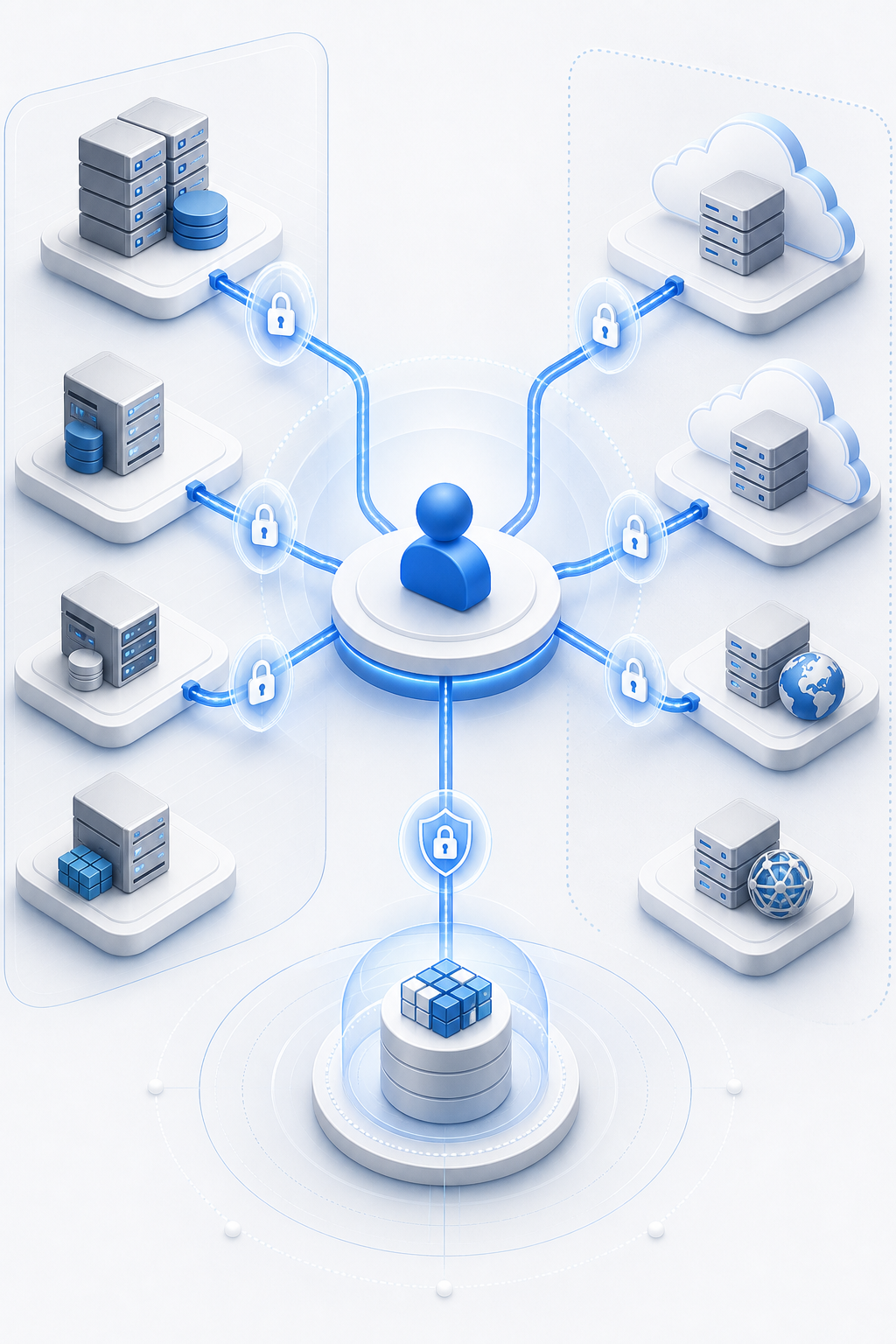
THE DECISION PATH
Agentic Enterprise / operating model- 01Workflow
- 02Context
- 03Control
- 04Evidence
# Executive insight — Should your enterprise connect Salesforce Agentforce to Model Context Protocol (MCP) servers now?
Enterprises building agentic workflows face a concrete infrastructure decision this quarter: expose sensitive, high-value internal context to AI agents by integrating it via an open context protocol, or continue with bespoke point-to-point integrations. The primary-source dossier supplied here — Salesforce’s Agentforce MCP support page and the Model Context Protocol architecture docs — makes one thing clear: Agentforce is being positioned as a native MCP host/client and MCP itself defines the transport, discovery, and primitives you’ll use to deliver context to agents. (salesforce.com)
This Insight translates those two sources into a practical enterprise decision with an implementation-first path you can action this quarter.
Short answer (the decision)
Run a constrained, measurable pilot that connects an on-prem or VPC-hosted MCP server to your Agentforce deployment as a local MCP client (stdio transport) to validate security, governance, and operational profiles — then, if results meet your controls, extend to Streamable HTTP with OAuth for vetted third-party MCP servers discovered via AgentExchange. The pilot reduces risk (keep data local), confirms latency and observability expectations, and establishes policy guardrails before you scale. (modelcontextprotocol.io)
Why this is the right concrete decision now
- Salesforce positions Agentforce as a native MCP client and an enterprise gateway for agentic interoperability — with a central MCP server registry, governance controls, and rate limiting designed to keep agent operations trusted and auditable. That makes Agentforce the logical integration surface for internal and partner MCP servers. (salesforce.com)
- MCP is a lightweight, transport-agnostic protocol that explicitly supports local (stdio) and remote (Streamable HTTP) transports, plus JSON-RPC-based discovery, primitives (tools, resources, prompts), notifications, and recommended auth patterns (OAuth). Those protocol details let you choose a low-risk local-first pattern, then move to remote-mode when you’ve validated policy and scale. (modelcontextprotocol.io)
Headless 360 operating-model point of view
Headless 360 recommends a „local-first, registry-governed“ operating model for agentic integrations:
- Local-first: Start with MCP servers that run inside your security boundary and connect to Agentforce via stdio transport to avoid exposing PII or sensitive business logic to external networks while you validate behavior and governance. MCP explicitly documents stdio for single-client, low-latency local servers. (modelcontextprotocol.io)
- Registry-governed: Use Agentforce’s central MCP server registry to whitelist available MCP servers, control capability discovery, and apply per-server policies (rate limits, allowed primitives). Agentforce advertises this registry and policy layer as the enterprise control plane for agent interoperability. (salesforce.com)
- Phased scale: After validation, adopt Streamable HTTP with OAuth for vetted partner MCP servers (AgentExchange) and enforce token scopes, telemetry, and quota. MCP recommends OAuth for remote transports; Agentforce surfaces AgentExchange as the catalog of vetted partners. (modelcontextprotocol.io)
This model balances developer velocity (reuse of MCP primitives and SDKs) with the enterprise nonfunctional requirements (security, compliance, governance) Headless 360 clients expect.
Implementation playbook (90–120 days)
Phase 0 — governance and scope (week 0–2)
- Define data classes allowed to be served by MCP servers (e.g., catalog metadata vs. PII).
- Decide success criteria: no external exfiltration, acceptable agent interaction latency as experienced by service reps, and clear audit trails.
Phase 1 — local pilot (stdio) (weeks 2–6)
- Run a reference MCP server inside your VPC or on-prem. Use MCP SDKs and the MCP reference server implementations in the spec repo. Configure it to expose a small set of resources and a tool (e.g., a read-only customer account lookup). MCP docs describe local stdio transport for single-client use. (modelcontextprotocol.io)
- Configure Agentforce to discover and connect to that local MCP server (Agentforce is documented as a native MCP client and supports a centralized registry). Validate discovery, primitives, and notifications end-to-end. (salesforce.com)
- Validate audit logs and that no requests leave your security perimeter.
Phase 2 — governance hardening and observability (weeks 6–10)
- Add policy enforcement (allowed primitives, dataset filters), rate limiting, and structured telemetry. Agentforce mentions rate limiting and centralized controls in its architecture. (salesforce.com)
- Run red-team style tests for unintended tool invocation and resource access.
Phase 3 — vetted expansion (weeks 10–12+)
- If pilot success criteria are met, add Streamable HTTP MCP servers for partner capabilities. Use OAuth and token scopes for authentication as recommended in the MCP transport section. Instrument quotas and SLA monitoring. (modelcontextprotocol.io)
- Publish approved MCP servers in your Agentforce registry and consider AgentExchange partners for 3rd-party services. (salesforce.com)
Risks, mitigations, and guardrails
- Risk: accidental data exfiltration via third-party tools. Mitigation: local-first pilot, strict whitelist in Agentforce registry, and per-request _meta fields to maintain statelessness and request provenance. (modelcontextprotocol.io)
- Risk: operational overload from many agents calling an MCP server. Mitigation: enforce Agentforce rate limiting and server-side quotas; instrument circuit-breakers and backpressure. (salesforce.com)
- Risk: version/compatibility drift. Mitigation: MCP advertises server/discover and per-request protocol versioning; require discovery checks in CI before registering an MCP server into the production registry. (modelcontextprotocol.io)
Measurable success criteria (pick 3)
- Security: No production PII served from third-party MCP servers during pilot.
- Governance: All MCP servers used by Agentforce are registered and appear in a central audit trail within Agentforce registry.
- Developer velocity: A new capability that used to require a bespoke integration can be exposed as an MCP resource or tool and consumed by an Agentforce agent within a single sprint.
Quick FAQ
Q: Does Agentforce already support MCP?
A: Yes — Salesforce positions Agentforce as an enterprise MCP host/client with a centralized registry and governance controls to connect internal and third-party MCP servers. (salesforce.com)
Q: Should I run MCP servers locally or remotely?
A: Start local (stdio) for sensitive context and single-client scenarios, then adopt Streamable HTTP with OAuth for vetted remote MCP servers once policy, telemetry, and rate limiting are validated. MCP documents both transports and recommends OAuth for remote auth. (modelcontextprotocol.io)
Q: What protocol primitives do I need to implement?
A: MCP defines resources, tools, and prompts as core primitives, plus notifications for updates. Use the MCP SDKs and the spec-driven discovery (server/discover) to expose capabilities. (modelcontextprotocol.io)
References
- https://www.salesforce.com/agentforce/mcp-support/
- https://modelcontextprotocol.io/docs/learn/architecture
HEADLESS 360 OPPORTUNITY SESSION
Bring one workflow.
Leave with a clearer move.
KEEP READING


