
Agentic Enterprise / HEADLESS 360
Agentforce + MCP on Headless 360: A 90‑Day Pilot Playbook
A practical 90‑day pilot plan for integrating Model Context Protocol (MCP) as the context fabric for Agentforce on the Headless 360 platform, with a Headless 360 operating‑model point of view and a concise technical checklist.
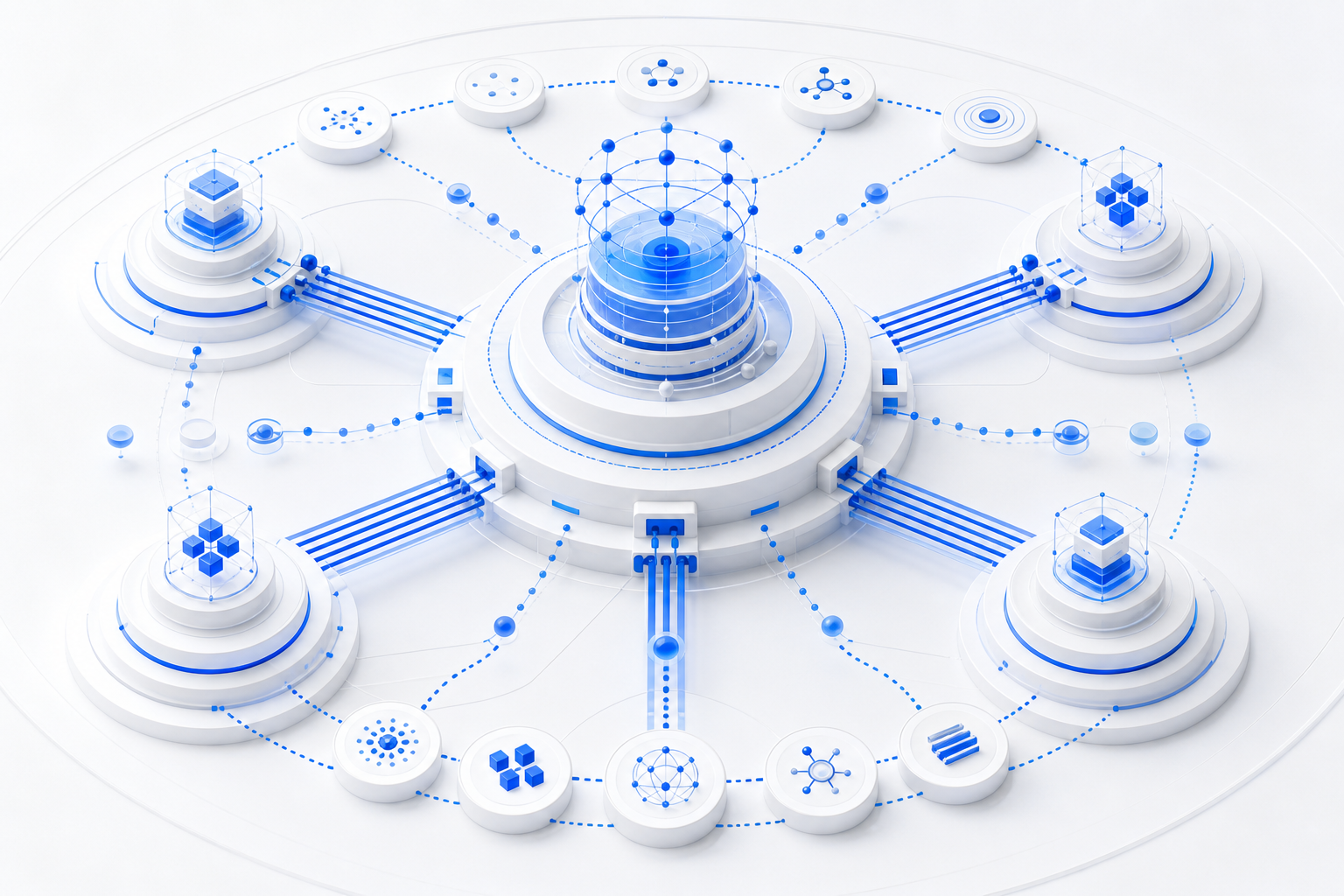
THE DECISION PATH
Agentic Enterprise / operating model- 01Workflow
- 02Context
- 03Control
- 04Evidence
# Deploying MCP‑Enabled Agentforce with Headless 360 — an actionable 90‑day pilot
Date: August 26, 2026
Executive summary
Enterprises that want to operationalize agentic AI should stop debating abstract platform choices and run a tightly scoped pilot that proves two things: (1) MCP can reliably deliver the right contextual data to agents, and (2) Agentforce on the Headless 360 platform can use that context to complete a bounded set of high‑value workflows. This Insight lays out a 90‑day decision plan, a technical checklist derived from the Model Context Protocol (MCP) architecture, and a Headless 360 operating‑model point of view for program leaders.
Why this matters now
The Model Context Protocol (MCP) defines a minimal, transport‑agnostic interface for delivering context, tools, and notifications to AI hosts. MCP’s data‑layer primitives and two supported transports (stdio for local, Streamable HTTP for remote) create a practical way to separate context delivery from model lifecycle and UI choices. Agentforce on Headless 360 already positions agents, operator tooling, and integrations as composable platform capabilities — the combination gives you a clean separation: MCP provides context and discovery; Headless 360 runs agents and productizes outcomes. When done deliberately, this reduces engineering coupling and shortens time to predictable results.
Sources for technical constraints and architecture: Model Context Protocol documentation (Architecture overview) and Salesforce Agentforce MCP Support documentation.
Clear decision for executives (what to decide today)
Decision: Approve a 90‑day pilot to validate MCP as the context fabric for Agentforce workloads on Headless 360, with a go/no‑go gate at day 60 based on three operational KPIs (integration reliability, latency to context, and business outcome for one workflow).
Why this is a concrete decision: it prioritizes a short, measurable experiment over indefinite platform evaluation and produces data you can use to scale or stop.
90‑day pilot plan (milestones and acceptance criteria)
- Weeks 0–2 — Scope & design
- - Select 1–2 high‑value, narrow workflows (e.g., guided claims triage, sales opportunity qualification, or a targeted self‑service flow).
- - Define success metrics: end‑to‑end completion rate, mean time to resolution, and context delivery reliability (target ≥ 99% for the pilot).
- - Identify data sources and owners; map required primitives (tools, resources, prompts) per MCP.
- Weeks 3–6 — Build & integrate
- - Stand up an MCP server that exposes the required discovery endpoint and resources; choose transport: use stdio for local, Streamable HTTP for remote services.
- - Implement minimal data contracts and authorization (MCP recommends using OAuth for tokens when using remote transports).
- - Configure Headless 360 / Agentforce to consume MCP discovery and tool definitions and wire the agent to the selected workflow.
- Weeks 7–9 — Controlled test & tune
- - Run a closed pilot with selected users and monitor context delivery, invocation success, and agent responses.
- - Verify that discovery, tool execution, and notifications work end‑to‑end.
- Weeks 10–12 — Decision gate and scale plan
- - Day 60 review: if reliability and outcome KPIs meet targets, budget a phase‑2 scale (broader workflows, production hardening). If they fail, capture failure modes and decide whether to fix, re‑scope, or stop.
Technical checklist (MCP + Agentforce practicalities)
- Protocol and transports
- - Implement the MCP data layer (JSON‑RPC 2.0 message schema) and support either stdio or Streamable HTTP based on deployment topology.
- - Use OAuth for Streamable HTTP to align with recommended authentication flows.
- Discovery and primitives
- - Publish a concise discovery response exposing the minimal set of tools and resources your agents require.
- - Keep resources small and immutable where possible; use notifications for updates rather than polling.
- Observability and guardrails
- - Instrument MCP server events and headless agent invocations; collect metrics on discovery latency, tool execution time, and notification delivery.
- - Add a human‑in‑the‑loop safety net for the pilot: require operator confirmation for actions that change downstream systems.
- Ops and data contracts
- - Treat MCP interfaces as product APIs with versioned schemas and compatibility guarantees.
- - Maintain a single source of truth for resource definitions so Headless 360 agents consume consistent context across environments.
Headless 360 operating‑model point of view
Headless 360 is not just a runtime: it is the platform that operationalizes humans‑with‑agents by separating platform responsibilities from product teams. From our point of view, successful adoption requires three organizational shifts:
1) Platform‑first API contracts: treat MCP endpoints and Agentforce tool definitions as platform products with SLAs, rollback plans, and a single engineering owner.
2) Small, cross‑functional pilots: create a 3–6 person team (platform engineer, product owner, data steward, and an operations lead) that owns the 90‑day runbook and day‑60 gate.
3) Guardrails & escalation: define explicit human approval gates for actions that modify critical data or customer outcomes; integrate escalation into Headless 360 operator workflows so humans can intercede with context supplied by MCP.
This operating model reduces friction between centralized platform teams and embedded product teams and makes MCP a shared contract rather than a tactical integration.
Risks and mitigations
- Risk: Context mismatch or schema drift between MCP server and agents.
- - Mitigation: Versioned resources and small, incremental changes with automated contract tests.
- Risk: Latency from remote transports impacting agent responsiveness.
- - Mitigation: Use stdio for locally co‑located services or introduce caching layers and fallbacks for critical resources.
- Risk: Insufficient observability during the pilot.
- - Mitigation: Instrument discovery, tool execution, and notifications from day one and tie metrics to the day‑60 decision gate.
FAQ (concise)
Q: How long should we run the pilot?
A: 90 days total with a formal go/no‑go review at day 60.
Q: Which transport should we use?
A: Use stdio for local, low‑latency deployments; use Streamable HTTP with OAuth for remote or multi‑tenant MCP servers. Choose based on your topology and security posture.
Q: Who should own the MCP server?
A: A platform team that can guarantee interface stability and SLA adherence; product teams should own workflow logic and accept the platform contract.
Q: What makes a pilot successful?
A: Meeting the predefined reliability and outcome KPIs and having repeatable integrations (discovery, tools, resources) that can be scaled.
References
- Model Context Protocol — Architecture overview (MCP documentation): https://modelcontextprotocol.io/docs/learn/architecture
- Agentforce MCP Support — Headless 360 and Agentforce product pages: https://www.salesforce.com/agentforce/mcp-support/
HEADLESS 360 OPPORTUNITY SESSION
Bring one workflow.
Leave with a clearer move.
KEEP READING


