
Agentic Enterprise / HEADLESS 360
Deploying Agentforce with MCP: A Headless 360 Decision for 90‑Day Production
A practical 90‑day decision for enterprises: run Headless 360 with Salesforce Agentforce and Model Context Protocol servers to isolate context, enforce governance, and measure outcomes before scaling agent deployments.
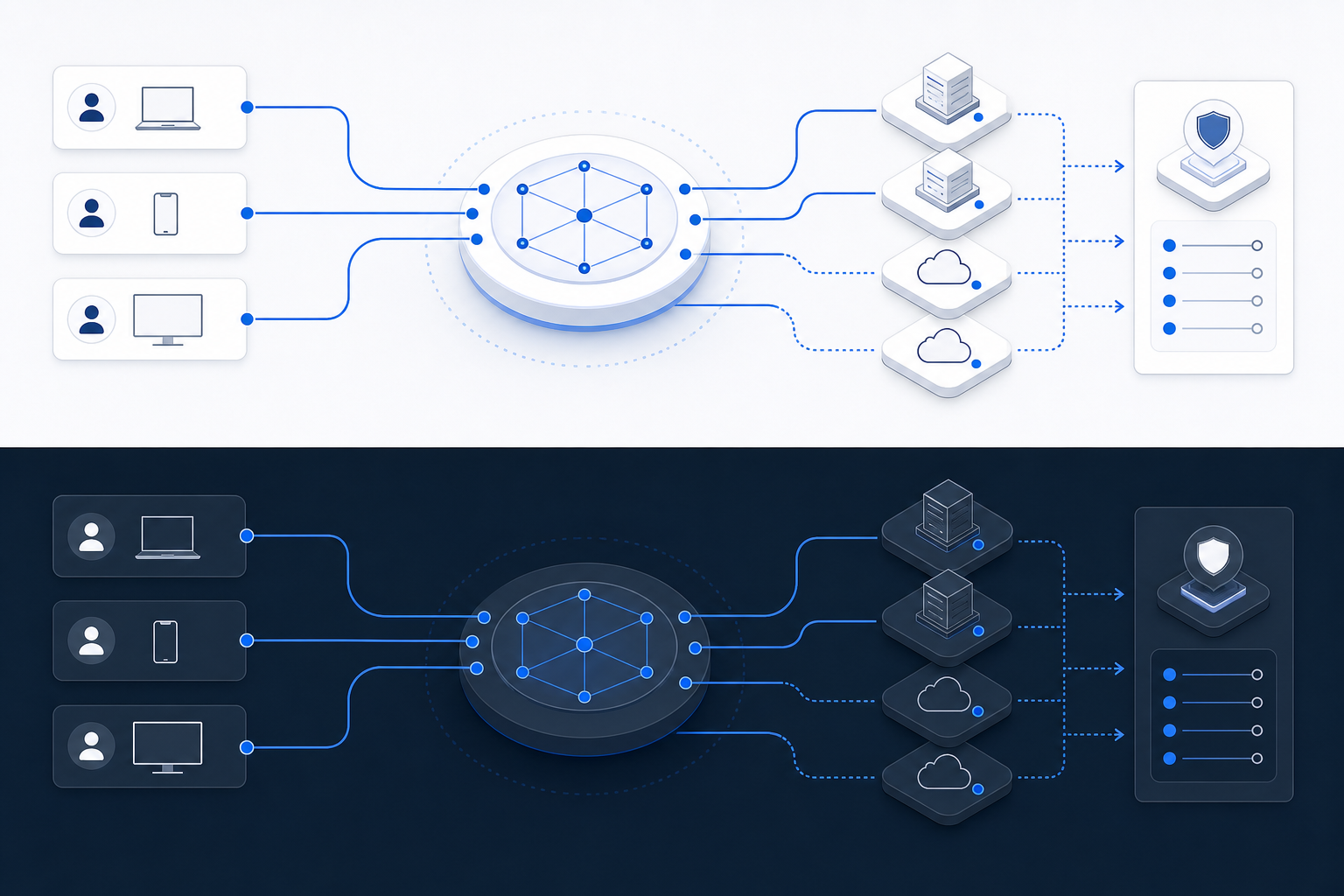
THE DECISION PATH
Agentic Enterprise / operating model- 01Workflow
- 02Context
- 03Control
- 04Evidence
# Today’s Insight — Agentforce + MCP: A Practical Headless 360 Decision for August 31, 2026
Enterprises standing at the AI integration inflection point must choose a concrete first production investment that controls risk, preserves sensitive context, and unlocks measurable business outcomes. The primary-source dossier provided points to a narrow and practical decision: adopt a Headless 360 implementation that combines Salesforce Agentforce as the agent orchestration and experience layer with Model Context Protocol (MCP) servers to provide discoverable, auditable context to agents. This approach converts the “agentic arms race” headlines into an operational program you can budget, pilot, and scale.
Why this is the right decision now
- Salesforce coverage shows agent deployments and the agentic workforce accelerating across enterprises, and their product pages foreground Headless 360 and Agentforce as integration surfaces for Customer 360. The business imperative is clear: moving from experiments to production requires an architecture that isolates model inference from enterprise context and governance. (Salesforce stories and product pages in the dossier.)
- The MCP architecture explicitly solves the “context delivery” problem: a JSON‑RPC data-layer, transport choices for local or remote servers, and primitives (tools, resources, prompts, notifications) designed so agents consume curated, versioned context rather than raw database dumps. Using MCP reduces blast radius and creates a clear audit trail for what context an agent saw when it acted. (Model Context Protocol docs in the dossier.)
Put simply: don’t chase “first to launch” glory. Choose a Headless 360 + MCP approach that makes your initial production decision about where context lives, how it’s discovered, and how outcomes are measured.
The decision to make this week (concrete)
Approve a 3‑month pilot that: 1) targets a single high-frequency, medium-sensitivity workflow (examples: HR knowledge assistant for employee FAQs, a field-service dispatch assistant, or a contact-center triage agent); 2) provisions an MCP server topology that keeps the most-sensitive context local via the stdio transport while allowing lower-sensitivity resources to be surfaced from a Streamable HTTP MCP server; and 3) integrates the pilot with the Headless 360 Agentforce stack for orchestration and observability.
Budget ask (example scope): engineering and security effort to deploy 1 local MCP server + 1 remote MCP server; one Headless 360 integration sprint; observability and logging to capture context access and agent actions; and a 2‑week internal beta with measured KPIs. The goal is a defensible go/no-go after 90 days based on adoption and risk signals.
Architecture guide — minimal, secure, effective
- MCP placement: run a local MCP server (stdio transport) for protected PII and regulatory data sources; run a remote, authenticated Streamable HTTP MCP server for sanitized knowledge bases and product content. The dossier’s MCP documentation describes these transport options and their tradeoffs.
- Context primitives: use MCP “resources” to represent stable, versioned assets (policies, schemas) and “tools” for agent actions (read-only lookups, ticket creation). Limit tool scope for the pilot to provable, reversible operations.
- Discovery and least-privilege: configure the MCP discovery response so each agent only sees the tools/resources authorized for its role. Use MCP notifications for event-driven refresh of ephemeral context (e.g., live schedule changes).
- Agent orchestration: surface agent UI and routing through Headless 360 / Agentforce so humans remain in the loop for escalation and for final decisioning on actions with material impact.
Measuring success (KPIs you can report after 90 days)
- Adoption: percentage of target users who use the assistant at least once per day/week (measured via Headless 360 analytics).
- Containment: number of agent actions that required human escalation vs. fully handled by the agent (lower escalation acceptable for low-risk workflows).
- Safety & compliance: audit trail completeness (every action linked to the MCP context snapshot) and number of policy‑violations flagged by security review.
- Business outcome: time saved per interaction or reduction in average handle time (for support) or faster time-to-schedule (for field service).
Track these with a predefined dashboard and a 90‑day review session to decide scale vs. iterate.
Headless 360 operating-model point of view
- Single source of operational truth: Treat MCP servers as the canonical gatekeepers for agent-visible context. Do not bypass MCP for ad hoc model calls.
- Two‑tier sensitivity model: run highly sensitive resources locally (stdio transport) and use authenticated remote servers for sanitized, shareable content. This minimizes compliance burden while enabling scale where appropriate.
- Human + agent choreography: design workflows so agents accelerate common work and humans retain control over exception handling. Adopt Headless 360 observability to make human interventions visible and auditable.
- Govern early, scale fast: create a compact governance playbook (approved tools, data classifications, escalation thresholds) that every pilot must certify against before production rollout.
Implementation checklist (first 30 days)
- Pick pilot use case and agree success metrics.
- Provision one local MCP server (stdio) for sensitive resources and one remote MCP server (Streamable HTTP) for sanitized content.
- Define MCP discovery and tool list; implement least-privilege policies for each agent.
- Integrate Agentforce / Headless 360 with MCP endpoints and enable logging.
- Run a 2‑week internal beta; collect telemetry and compliance evidence.
- Convene 90‑day review with product, security, and operations teams.
FAQ (concise)
Q: What is MCP and why not just call the LLM?
A: MCP is a protocol that exposes versioned, discoverable context and tools to agents via a structured JSON‑RPC exchange and selectable transports. It decouples sensitive context storage from model inference, enabling auditable, least‑privilege access.
Q: Can we keep proprietary data off the cloud?
A: Yes — MCP’s stdio transport is designed for local servers. Run your sensitive resources on a local MCP server so data never leaves your environment.
Q: How do we ensure agents don’t act outside their remit?
A: Use MCP tool lists to limit agent capabilities and require human confirmation for irreversible actions. Headless 360 orchestration should enforce these checks.
Q: How long before we can scale beyond the pilot?
A: The dossier suggests enterprises are already increasing agent deployments; operational readiness should be judged at the 90‑day review: if KPIs and audits pass, expand incrementally.
References
- Salesforce News & Stories — Agentforce and Agentic Enterprise coverage (source dossier). https://www.salesforce.com/news/stories/
- Model Context Protocol — Architecture overview, transport and data-layer primitives. https://modelcontextprotocol.io/docs/learn/architecture
HEADLESS 360 OPPORTUNITY SESSION
Bring one workflow.
Leave with a clearer move.
KEEP READING


