Agentic Enterprise / HEADLESS 360
Operationalizing Agentforce with MCP: A 90‑Day Enterprise Decision Playbook
A decision playbook that pairs Salesforce Agentforce with the Model Context Protocol (MCP). Includes a concrete 90‑day pilot architecture, team roles, transport choices, and a Headless 360 operating‑model point of view.
THE DECISION PATH
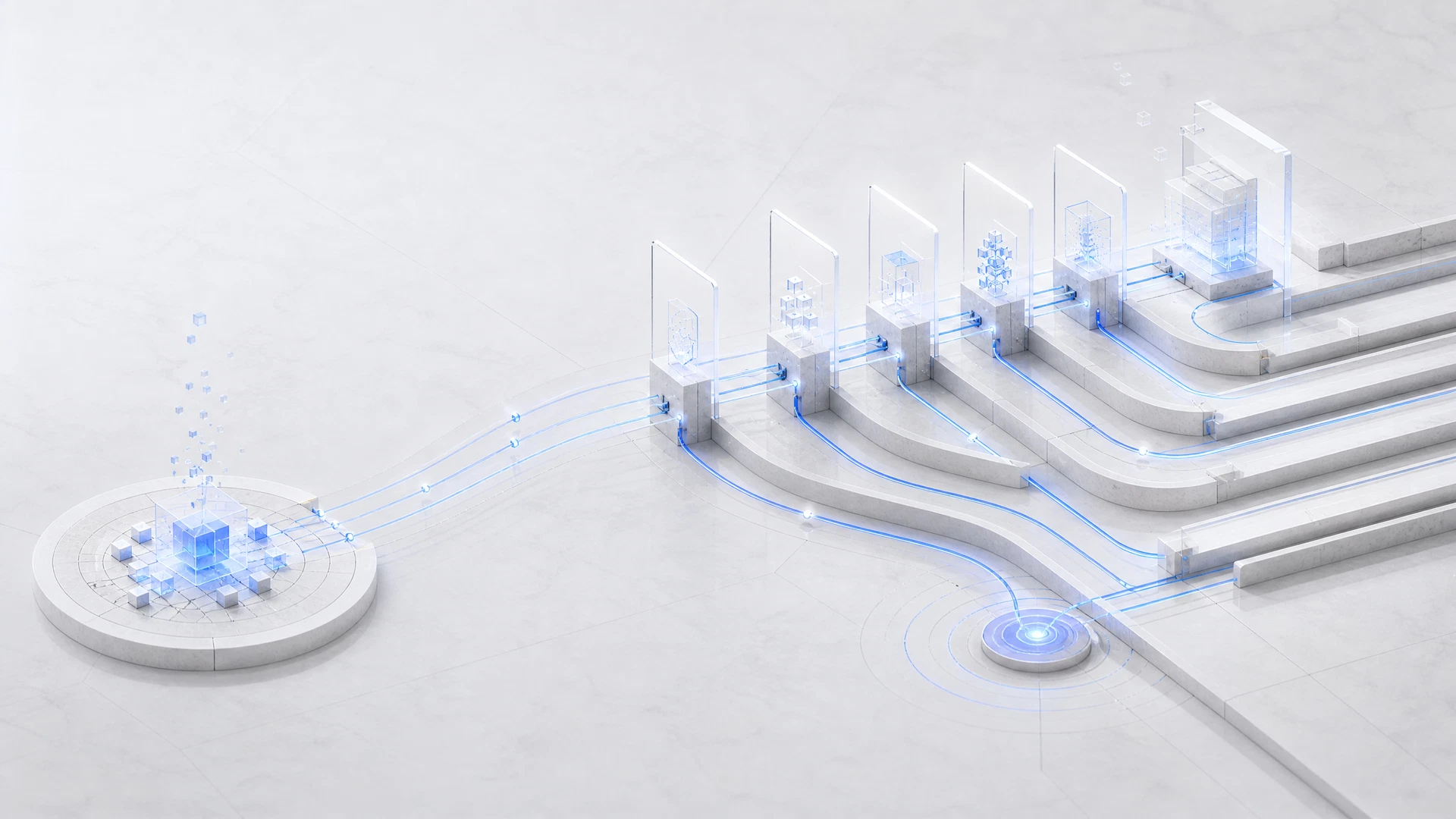
Agentic Enterprise / operating model- 01Workflow
- 02Context
- 03Control
- 04Evidence
# Operationalizing Agentforce with MCP: A 90‑Day Enterprise Decision Playbook
Enterprises adopting agentic architectures face two linked problems: (1) how to give AI agents secure, consistent access to the right enterprise context, and (2) how to orchestrate humans and agents without creating brittle integrations. The Salesforce Agentforce product family gives organizations agent-building tools, voice connectors, an AgentExchange marketplace, and operations tooling. The Model Context Protocol (MCP) is an open interoperability layer that standardizes how AI hosts obtain context from one or more context servers. Together they let you move from experimentation to a governed, production‑grade agentic platform — but only if you pick concrete integration, transport, and governance choices up front.
The decision you need to make this quarter
Decide to run a bounded 90‑day pilot that pairs Salesforce Agentforce agents with an MCP‑compatible context server. Constrain scope to one customer‑facing domain (contact center or field service), run the MCP server where your sensitive context lives, and use the MCP transport that matches your risk profile (stdio for local, Streamable HTTP for remote). The pilot outcome is a verdict: go/no‑go to expand Agentforce + MCP to other lines of business with a repeatable runbook.
Why this is a practical choice
- Agentforce exposes builder, voice, dev tools, AgentExchange and operations capabilities that accelerate agent creation and lifecycle management. These are purpose‑built to combine human and agent workflows on Salesforce. (Source: Agentforce product overview.)
- MCP is explicitly designed to provide context to AI applications through a composable client‑server architecture. Its data layer uses a JSON‑RPC 2.0 based protocol with discovery, tool/resource/prompts primitives and notification utilities; the transport layer supports stdio (local) and Streamable HTTP (remote) for different deployment models. (Source: MCP architecture doc.)
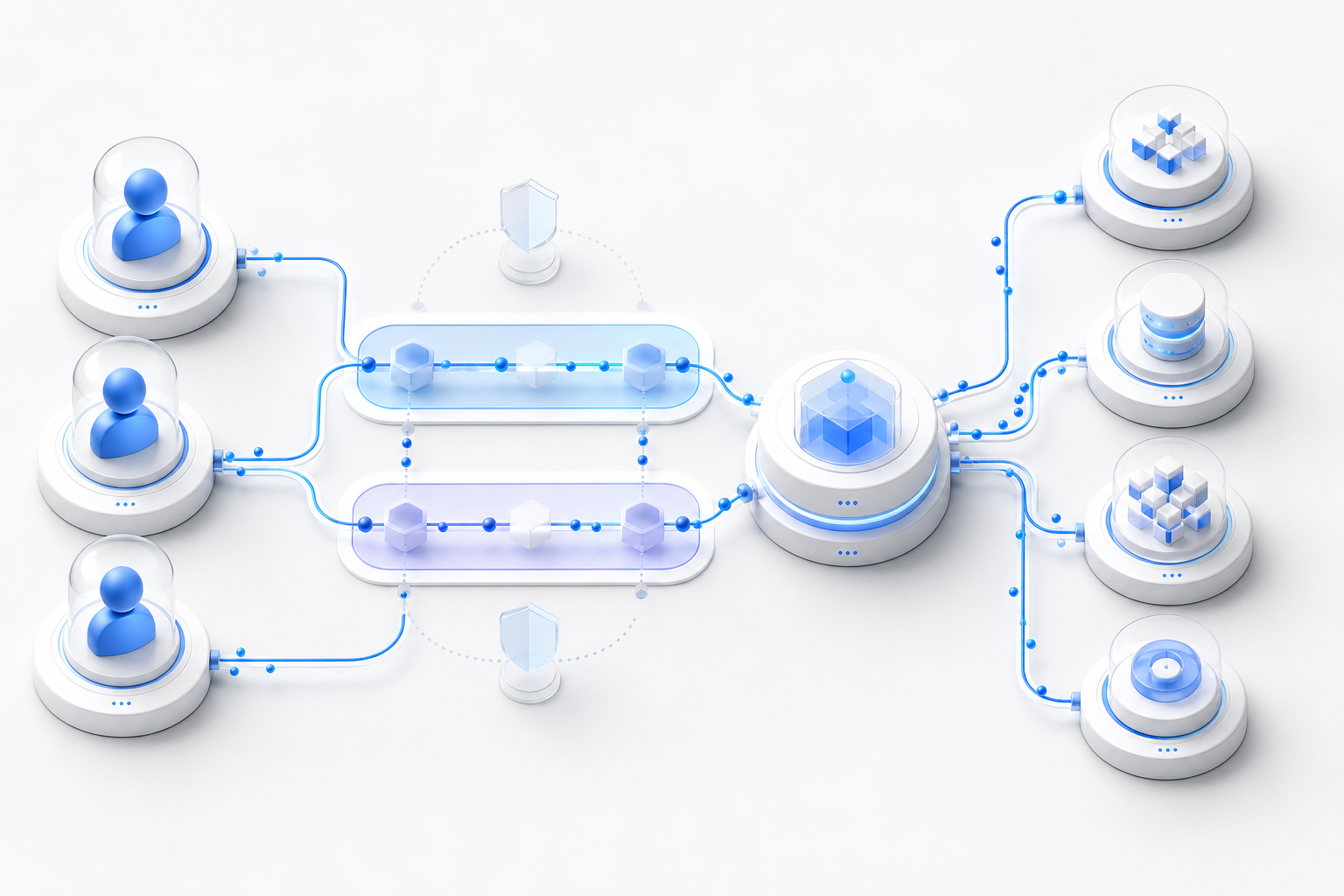
Combining them means you avoid point‑to‑point integration work: Agentforce can call standardized MCP endpoints to fetch the precise context an agent needs without embedding bespoke access logic into each agent.
Recommended pilot architecture (concrete)
- Scope: one business process — inbound contact center triage or first‑time field dispatch.
- Components:
- - Agentforce agents implemented with Agentforce Builder and Agentforce Voice (if voice is in scope).
- - An MCP server colocated with the enterprise data stores that hold sensitive context (CRM records, case history, internal knowledge bases).
- - An MCP client embedded in the Agentforce runtime or in a lightweight proxy that the agent invokes.
- Transport choice:
- - If the MCP server runs on the same host or locked VM with the agent runtime, prefer stdio transport for lowest latency and no network egress.
- - If the MCP server must be accessed across network boundaries (multi‑datacenter, cloud), use Streamable HTTP with OAuth tokens and strict TLS configuration.
- Data layer controls: enable discovery, a minimal tool set for the pilot, and notifications for real‑time updates to context.
These choices are directly aligned with the MCP architecture: a clear data layer (what context is requested and returned) and a transport layer (how the messages move). Choose the transport first based on placement of sensitive data, then tailor the data primitives to the business process.
Team roles and governance (must happen before code)
- Executive sponsor (product owner for the pilot business domain).
- AI platform lead (owns Agentforce runtime and MCP client integration).
- MCP operator (runs and patches the MCP server; manages auth tokens/keys).
- Security & compliance reviewer (approves transport choice and data exposure rules).
- Contact center/field ops SME (defines success metrics and escalation rules).
Governance checkpoints: data access policy, agent authorization mapping to human roles, auditing and notification retention, and a rollback plan for agent behavior that violates guardrails.
Pilot success criteria (qualitative + measurable)
- Technical: reliable MCP discovery and context retrieval with acceptable end‑to‑end latency for the pilot flow under load.
- Operational: agents and humans can complete the target workflow without manual context searches; observability traces show end‑to‑end requests tied to MCP context artifacts.
- Business: measurable improvement in process cycle time (baseline vs pilot) and a decision by stakeholders to expand or halt.
(Do not set specific numerical targets here until you baseline the current process; baseline measurements are part of the 0–30 day ramp.)
Headless 360 operating‑model point of view
Headless 360 recommends treating Agentforce as a platform product and MCP as the context fabric. That implies two operating streams: (1) Agent Product Engineering — builds and deploys agent behaviors and conversational flows using Agentforce Builder, and (2) Context Services — operates MCP servers, connectors, and discovery contracts. Separate teams, shared SLAs: Product Engineering owns the agent UX and orchestration in Salesforce; Context Services owns schema contracts, authentication, and change notifications. Operational handoffs must be codified as playbooks (runbooks) and enforced through CI/CD gates and automated contract tests against MCP discovery responses.
Minimal 90‑day plan (high level)
- Days 0–14: finalize scope, stand up MCP server in target environment, configure transport and auth. Run discovery and simple tool/resource tests.
- Days 15–45: build Agentforce agent prototypes that call MCP via the chosen client pattern. Implement logging, observability, and fallbacks.
- Days 46–75: run closed pilot with real users in a shadow/dual‑handle mode. Gather baseline metrics and qualitative feedback.
- Days 76–90: evaluate pilot against success criteria, harden security, and produce a go/no‑go recommendation and expansion roadmap.
Short checklist for procurement & infra
- Confirm where sensitive context will be hosted (on‑prem, private cloud, public cloud).
- Decide MCP transport: stdio (local) or Streamable HTTP (remote) and procure required network authorizations.
- Reserve Agentforce Builder and Agentforce Dev Tools entitlement slots for the pilot team.
- Instrument traceability: ensure request IDs and discovery artifacts are preserved end‑to‑end.
FAQ (concise)
Q: Do I have to replace existing integrations to use MCP?
A: Not immediately. MCP is an interoperability layer — use it to expose context where it makes integration simpler. Legacy integrations can continue while you migrate critical flows to MCP.
Q: Where should the MCP server run?
A: Run it where your sensitive context resides. For the tightest security and lowest latency, colocate the MCP server with the data; otherwise use Streamable HTTP with strong authentication and network controls.
Q: Will Agentforce work with MCP out of the box?
A: Agentforce provides the agent and operations tooling; the integration pattern is to embed an MCP client (or proxy) so agents request context via MCP. The pilot verifies and codifies that pattern for your environment.
References
- Salesforce Agentforce product & support overview: https://www.salesforce.com/agentforce/mcp-support/
- Model Context Protocol — Architecture overview: https://modelcontextprotocol.io/docs/learn/architecture
HEADLESS 360 OPPORTUNITY SESSION
Bring one workflow.
Leave with a clearer move.
KEEP READING