Agentic Enterprise / HEADLESS 360
Today’s Insight: Run a 90‑day Agentforce + MCP Pilot — Decision Brief (Nov 14, 2026)
A decision-focused briefing recommending a 90-day pilot that pairs Salesforce Agentforce with an MCP-compliant context server; includes concrete transport choices, implementation checklist, and Headless 360 operating-model POV.
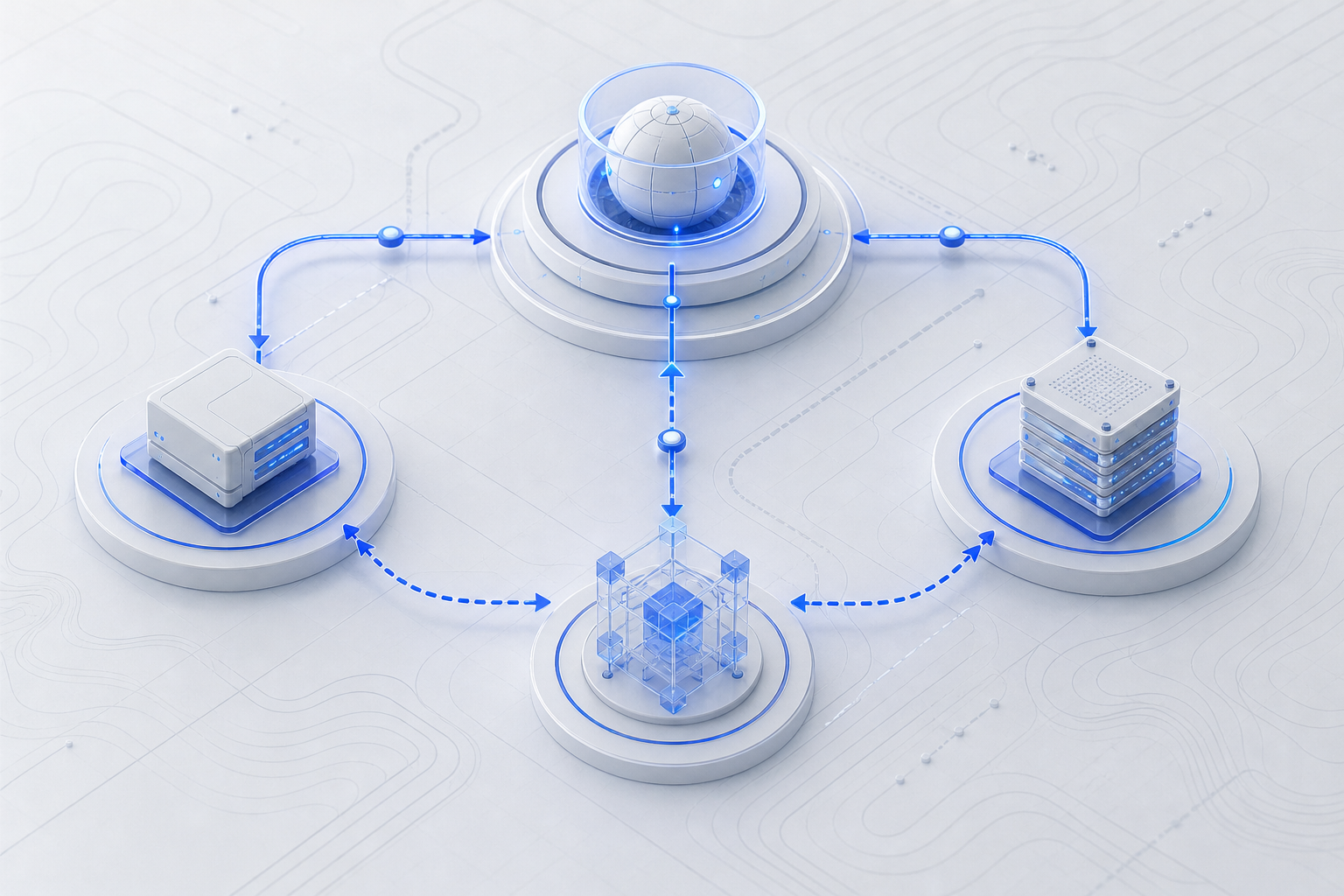
THE DECISION PATH
Agentic Enterprise / operating model- 01Workflow
- 02Context
- 03Control
- 04Evidence
# Today's Insight — Agentforce + Model Context Protocol (MCP)
Date: November 14, 2026
Executive summary
Salesforce's Agentforce product pages present Agentforce as a platform to put humans and software agents to work together across sales, service, and industry clouds. The Model Context Protocol (MCP) documentation describes a compact, transport-agnostic JSON-RPC protocol that makes context exchange between AI hosts and context servers explicit (discovery, tools, resources, prompts, notifications). Together these two primary-source dossiers point to a concrete procurement and architecture decision for enterprise leaders: run a controlled 90-day pilot that pairs Agentforce workflows with one or more MCP-compliant context servers, and choose transport and placement (local vs remote) according to data sensitivity and latency needs.
This Insight gives an implementable decision, a technical checklist, and the Headless 360 operating-model point of view to help CROs, CIOs, and SVPs of Product decide now.
What the sources say (short)
- Salesforce Agentforce materials position Agentforce as a cross-product capability that includes Builder, Voice, Dev Tools, AgentExchange, and operations support for integrating agents and humans across lines of business. The documentation emphasizes platform and industry integrations and shows Agentforce is intended for production use across Sales, Service, Commerce, and industry clouds. (Source: Salesforce Agentforce MCP support).
- The MCP Architecture overview documents a two-layer design: a JSON-RPC 2.0 based data layer (discovery, tools, resources, prompts, notifications) and a transport layer with two primary transports: stdio for local, low-latency deployments, and Streamable HTTP for remote servers—plus recommendations (OAuth for auth) and support for notifications and streaming. The doc treats context as a first-class, versioned service that AI hosts subscribe to. (Source: Model Context Protocol Architecture).
Why this matters now (concrete)
If you plan to run Agentforce agents against enterprise systems of record, the MCP model offers a repeatable way to surface, version, and secure the context those agents need. Choosing the wrong transport or placement (e.g., remote HTTP for regulated data that would better stay local) will create unnecessary risk or latency. The decision now is not whether to explore agents — it is how to place and connect Agentforce to context providers in a way that protects data, enables observability, and permits incremental scale.
The recommended decision (one concrete decision to make this week)
Approve a 90-day pilot that pairs a single Agentforce use case (customer-service escalation or sales opportunity qualification) with an MCP-compliant context server implemented in one of two configurations:
- Option A (sensitive data / low latency): Deploy a local MCP server using the stdio transport colocated with the Agentforce runtime to keep context and PII in-house.
- Option B (multi-tenant scale / integrations across clouds): Use a Streamable HTTP MCP server with OAuth and strict scope-limited tokens for cross-service integrations.
Authorize Product, Security, and Platform to implement Option A for the first pilot; specify explicit acceptance criteria (latency target, auditability of discovery and notifications, and operator-runbook for rollback). If Option A meets acceptance criteria within 60 days, prepare to expand to Option B for non-sensitive contexts.
90-day pilot plan (practical steps)
- Week 1–2: Select use case and stakeholders. Confirm data sensitivity classification and target KPI (time-to-resolution or agent handle-time reduction as qualitative goal).
- Week 3–4: Provision a local MCP reference server (the MCP docs detail the primitives and discovery flow). Create a small tool registry that exposes only the necessary resources and tools.
- Week 5–8: Build the Agentforce flow (Builder + Voice or Agent Exchange) against the MCP server. Use stdio transport for the first run if data is regulated.
- Week 9–12: Run controlled traffic, collect observability data on discovery calls, tool execution latencies, and notifications. Conduct a security review (auth tokens, scope, logging) and a go / no-go review at day 60.
Do not open the production surface beyond the pilot until the security and discovery audit is complete.
Technical checklist (from MCP + Agentforce sources)
- Implement MCP discovery so Agentforce sees the server identity, versions, and available tools before use (MCP primitive: server/discover).
- Choose the transport: stdio for single-host, low-latency; Streamable HTTP for remote and scaled deployment. Use OAuth for tokens when using HTTP transport.
- Register a minimal tool and resource set (only the prompts and tools required for the pilot) and enable notifications for change events.
- Instrument discovery and execution RPCs for observability and create an operator playbook for tool-list change notifications.
Risks and mitigations
- Risk: Exposing regulated context to remote servers. Mitigation: Use local stdio MCP server for regulated data; enforce strict auth and token scopes for HTTP.
- Risk: Tool drift as tool lists change. Mitigation: Enforce versioned discovery and subscribe to MCP notifications; gate tool updates with a runbook.
- Risk: Latency impacting customer experience. Mitigation: start with local transport where latency matters and measure before scaling.
Headless 360 operating-model point of view
Headless 360 recommends treating context as a platform service: a versioned, discoverable, and observable API that agents consume rather than as ad hoc REST calls embedded in agent logic. Operationalize context servers with the same rigor you apply to identity and billing services: clear SLAs, auth model, change notifications, and CI for tool definitions. For pilot-to-production, separate the security boundary for high-sensitivity context (local MCP) from scale-oriented, multi-tenant context (Streamable HTTP with OAuth). Finally, require a declarative tool registry and a single source of truth for prompts and resources so your enterprise can trace agent decisions back to provable context snapshots.
Concise FAQ
Q: Which transport should we pick first?
A: For regulated or latency-sensitive data, start with stdio (local). For cross-team integrations at scale, prepare Streamable HTTP + OAuth after the pilot.
Q: Do we need to rewrite existing services?
A: Not necessarily. MCP is a protocol layer—wrap existing context stores with an MCP server adapter to avoid wholesale rewrites.
Q: Who should own the MCP server?
A: Platform engineering should host the MCP server in the pilot; security should own auth policy; product should own the acceptance criteria.
Q: What success signals matter?
A: Reliable discovery (no failed tool lookups), acceptable execution latency for agent actions, and a clean security review sign-off.
References
- https://www.salesforce.com/agentforce/mcp-support/
- https://modelcontextprotocol.io/docs/learn/architecture
HEADLESS 360 OPPORTUNITY SESSION
Bring one workflow.
Leave with a clearer move.
KEEP READING