Agentic Enterprise / HEADLESS 360
Agentforce + MCP: A 90-day decision plan for enterprise adoption
A 90-day decision plan for standardizing on MCP when integrating third-party tools with Salesforce Agentforce — pilot steps, success metrics, and operating-model guidance.
THE DECISION PATH
Agentic Enterprise / operating model- 01Workflow
- 02Context
- 03Control
- 04Evidence
# Executive insight: Should your enterprise standardize on MCP for Agentforce integrations?
Salesforce’s Agentforce positions itself as the enterprise bridge between human operators and AI agents — and it explicitly builds on the Model Context Protocol (MCP) to do it. MCP is an open standard for how agents discover and consume external tools, data (resources), and prompts. For enterprise technology and CX leaders deciding how to architect a multi-agent, multi-vendor environment, the concrete decision today is whether to standardize on MCP as the canonical context-and-tooling layer for Agentforce integrations. This brief lays out a recommended decision, a 90-day pilot plan, success criteria, and practical risks to mitigate.
What the dossier says (short)
- Salesforce describes Agentforce as "secure, enterprise-grade agentic interoperability" that "leverages Model Context Protocol (MCP)" to connect agents to third-party MCP servers and enterprise systems. Agentforce calls out a Centralized MCP Server Registry, granular governance, and intelligent rate-limiting as platform controls. (Salesforce Agentforce MCP support page.)
- The MCP specification defines a two-layer model: a JSON-RPC 2.0–based data layer (discovery, tools, resources, prompts, notifications) and a transport layer (stdio for local servers; Streamable HTTP for remote servers). MCP is stateless per request and recommends OAuth for token acquisition. (Model Context Protocol architecture documentation.)
The decision Headless 360 recommends
Standardize on MCP as the primary protocol for third-party tool and context integrations into Agentforce, and run a focused 90-day pilot that validates latency, context fidelity, governance, and fallbacks to human operators. Do not replace existing bespoke integrations immediately — gate the transition with a measurable rollout plan.
Why standardize now?
- Single integration contract: MCP provides discovery, primitives (tools, resources, prompts) and a per-request metadata model that reduces bespoke adapter work across many vendors. That means lower engineering cost for future integrations.
- Platform alignment: Salesforce is building Agentforce with MCP first-class (Centralized MCP Server Registry, policy controls, rate limiting), so standardizing reduces friction and unlocks AgentExchange partner integrations.
- Operational safety: MCP’s explicit discovery, stateless per-request metadata, and support for OAuth and token-based auth make it possible to enforce enterprise governance controls centrally.
90-day pilot (recommended scope)
Goal: Validate that MCP-based integrations meet SLAs and governance needs for one high-value use case (customer service escalation, order-tracking lookups, or payment status verification).
- Week 0–2 — Foundation
- - Register an internal MCP server (or select a vetted AgentExchange MCP partner) and connect it to Agentforce’s MCP registry.
- - Document the use case, data elements required, and access control policies.
- Week 3–6 — Integration & testing
- - Implement the MCP primitives needed (a small set of Tools, Resources, and Prompts) for the use case.
- - Test both transports where relevant: STDIO for any local, low-latency function and Streamable HTTP for remote services. Use OAuth tokens as recommended by the MCP spec.
- - Implement Agentforce policy and rate-limiting settings to simulate production load.
- Week 7–10 — Pilot validation
- - Run controlled traffic that mirrors real workloads. Measure end-to-end latency from Agentforce request to MCP tool execution and response fidelity (data completeness and freshness).
- - Confirm behavior for errors, timeouts, and revoked tokens; validate human fallback and audit trails.
- Week 11–13 — Decision gate
- - Evaluate against success criteria below and produce a go/no-go recommendation for broader rollout.
Success criteria (must be met to scale)
- Latency: 95th-percentile end-to-end response times meet SLAs for the use case.
- Fidelity: Resources returned via MCP are complete and correctly mapped to Agentforce context (no more than X% correction by human in pilot; set X by org risk appetite).
- Governance: Centralized registry + ACLs prevent unauthorized discovery and enforce least privilege for tool invocation.
- Resilience: Clear and tested human-fallback behavior for tool failures and revoked credentials.
- Observability: Logging, per-request metadata, and notifications expose who invoked which tools and what data was returned for audits.
Implementation architecture (practical pattern)
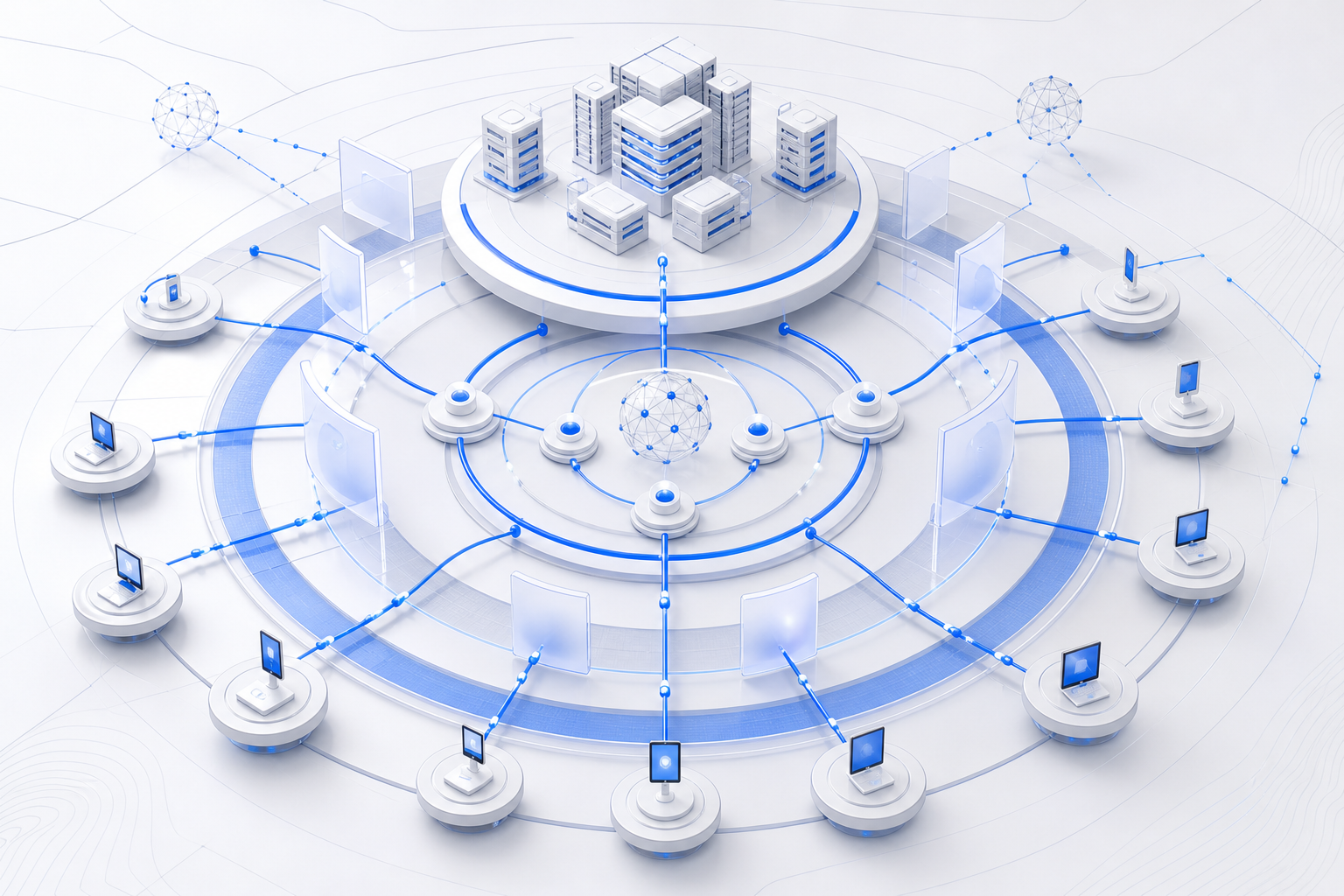
- Agentforce as MCP host / client: Agentforce will discover MCP servers through its registry (Salesforce provides a Centralized MCP Server Registry capability).
- Local services: Use STDIO transport for any on-premises microservices that must not traverse public networks.
- Remote services: Use Streamable HTTP for cloud MCP servers; adopt OAuth token flows the MCP doc recommends.
- Registry & policy layer: Maintain a single system of record (Agentforce registry) for authorized MCP servers and enforce rate-limiting and policy checks before agents may query tools.
Risks and mitigations
- Risk: Overconfidence in discovery — an exposed registry entry could allow unintended discovery.
- Mitigation: Require per-org vetting and mutual TLS or OAuth binding, and use the Agentforce centralized registry to gate discovery.
- Risk: Latency sensitivity for real-time flows.
- Mitigation: Reserve STDIO or colocated MCP servers for ultra-low latency operations; use cached Resources and pre-warmed prompts where possible.
- Risk: Data residency and compliance.
- Mitigation: Enforce resource-level access policies in MCP servers; log per-request metadata for audit and apply Data 360 policies at resource boundaries.
Headless 360 operating-model point of view
For enterprise CX and platform teams, adopt a two-track operating model:
- Platform track (team: Platform & Security) — Own the MCP registry, vet MCP partners on AgentExchange, enforce OAuth, rate-limiting, and policy templates, and provide reusable SDKs and runbooks for internal teams.
- Product track (team: Business domain owners + Integrations) — Own the product requirements, pilot execution, and acceptance tests for each use case. Use the platform track’s MCP on-ramps and be responsible for the domain prompts and resource schemas.
Decision rule: The platform track must approve an MCP server before product teams can run it in production. All production MCP tool invocations must cascade through the centralized registry and meet defined SLA and audit standards.
Quick FAQ
Q: Is MCP mandatory to use Agentforce?
A: Agentforce is built to interoperate with MCP and Salesforce advertises first-class MCP support; enterprises can still use bespoke APIs for specific integrations but standardizing on MCP reduces future integration overhead.
Q: Which transport should I choose — STDIO or HTTP?
A: Use STDIO for local, single-host services where latency and data locality matter; use Streamable HTTP for remote, multi-tenant, or vendor-hosted MCP servers. Follow MCP’s recommendation to use OAuth for remote token management.
Q: How does governance work?
A: Agentforce describes a Centralized MCP Server Registry plus ACLs, policy enforcement, and rate limiting. That registry is the control plane for which MCP servers and capabilities your agents can discover.
Q: What if an MCP tool fails in the middle of a customer interaction?
A: You must design a human-fallback or degraded-experience flow. The MCP spec supports explicit notifications and long-running operation progress tracking which you should use to surface failure modes back to Agentforce.
References
- Salesforce — Agentforce MCP Support: https://www.salesforce.com/agentforce/mcp-support/
- Model Context Protocol — Architecture overview (spec): https://modelcontextprotocol.io/docs/learn/architecture
HEADLESS 360 OPPORTUNITY SESSION
Bring one workflow.
Leave with a clearer move.
KEEP READING