
Agentic Enterprise / HEADLESS 360
Adopt MCP as the canonical context layer for Agentforce: a practical enterprise decision
A practical enterprise decision: adopt the Model Context Protocol (MCP) as the canonical context-exchange layer when scaling Salesforce Agentforce deployments. Includes a 60–90 day pilot plan, operating-model guidance, and a concise FAQ.
THE DECISION PATH
Agentic Enterprise / operating model- 01Workflow
- 02Context
- 03Control
- 04Evidence
# When to standardize on the Model Context Protocol (MCP) for Agentforce deployments
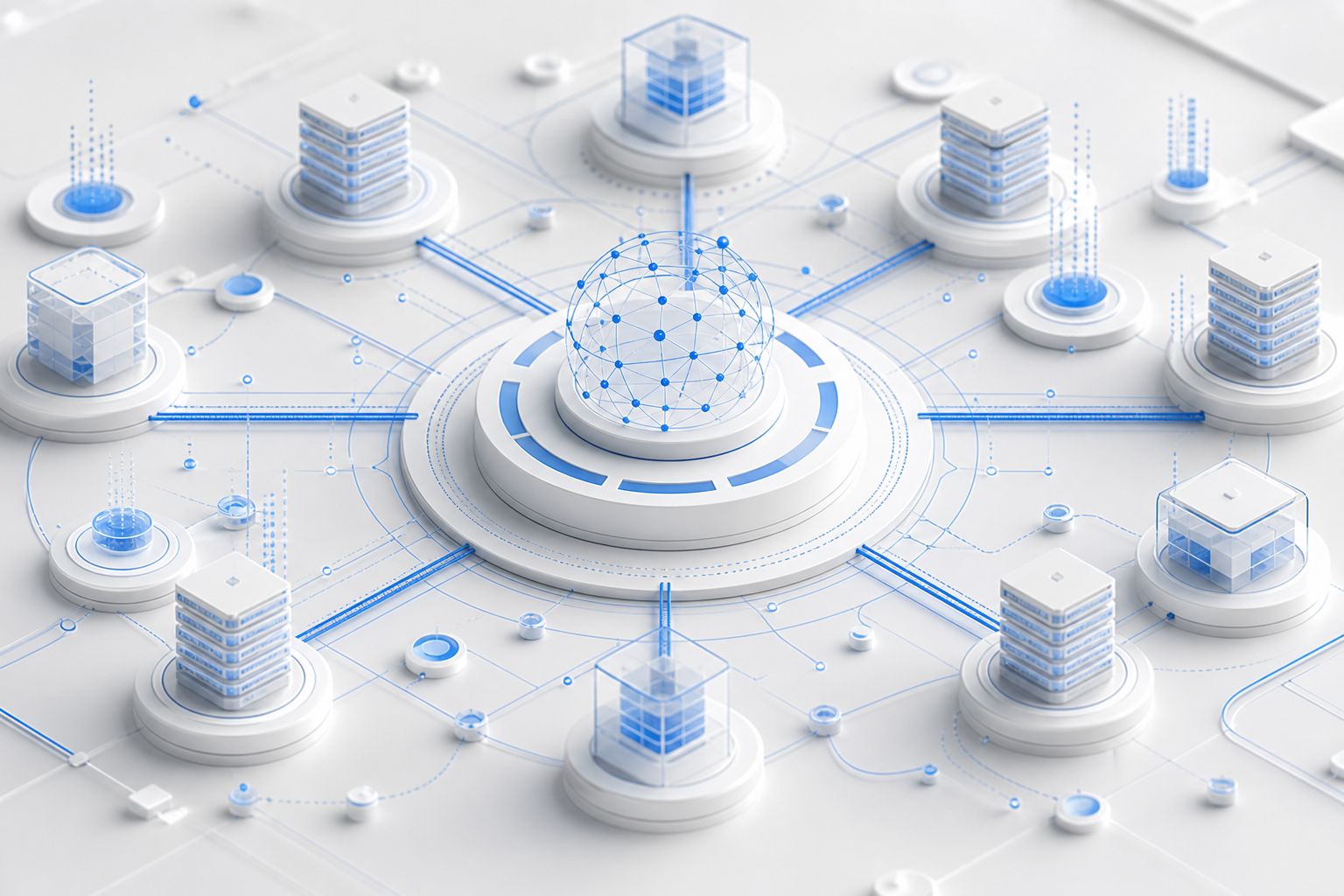
Enterprises moving from pilots to connected, agent-driven workflows face a repeated integration problem: how to reliably and securely supply the context an agent needs, and how to make that context portable across tools, runtimes, and cloud boundaries. Salesforce’s Agentforce product line documents MCP support and the Model Context Protocol documentation lays out a clear, transport-agnostic architecture for context exchange. Together these sources make a practical decision visible: for any enterprise that plans to run Agentforce agents beyond isolated pilots, adopt MCP as the canonical context-exchange layer between your systems and Agentforce agent runtimes.
This insight explains why that decision is concrete and actionable, and gives a concise 60–90 day pilot plan to validate MCP in production alongside Agentforce.
Executive summary
- The problem: agent runtimes need machine-readable, discoverable context (tools, resources, prompts, notifications) from many backend systems. Without a standard, integration becomes brittle, hard to govern, and difficult to port between environments.
- The decision: make MCP the enterprise standard for context exchange when integrating Agentforce agents with backend systems (data stores, business tools, observability and governance services). Use MCP servers to centralize discovery, capabilities metadata, and live notifications; use either the stdio transport for local/embedded runtimes and Streamable HTTP for remote/managed MCP servers as appropriate.
- The near-term outcome: a reproducible integration pattern that reduces custom connector work, enables consistent discovery and authorization, and gives teams a common test harness for agent behavior and governance.
Why MCP + Agentforce is a practical standard
The Model Context Protocol explicitly separates the data-layer semantics (tools, resources, prompts, notifications) from transport-layer concerns (stdio vs. Streamable HTTP). That separation is precisely what enterprise architects need: a stable schema for what context looks like, and a small set of supported transports for how to get it there.
Salesforce’s Agentforce materials identify MCP in their support and developer materials as part of the Agentforce tooling surface. That means Agentforce can consume context provided via MCP-compatible servers and can be treated as an MCP client in your architecture.
Putting MCP in the middle gives three immediate benefits:
- Predictable discovery: MCP’s discovery primitives let Agentforce enumerate server capabilities and tools programmatically rather than relying on brittle, ad hoc API contracts.
- Transport flexibility: the same MCP data-layer can be delivered over fast local stdio channels during development and via authenticated Streamable HTTP for remote production servers and multi-tenant MCP hosts.
- Observability and notifications: MCP supports notifications and progress primitives that make it straightforward to build eventing and audit trails for agent actions without embedding bespoke logging into each connector.
Decision playbook (what to do next)
- Confirm scope and constraints
- - Identify Agentforce use cases you plan to scale in the next 6–12 months (e.g., service triage, sales assistance, knowledge retrieval). Inventory the systems that must provide context (CRM records, product catalogs, identity, approvals).
- Select an MCP server pattern
- - For initial pilots, run a local or managed MCP reference server to reduce operational friction.
- - For production, choose Streamable HTTP or a managed MCP-hosted model that supports your auth method (OAuth recommended by MCP docs).
- Map Provider primitives to MCP primitives
- - For each backend system, map its capabilities to MCP primitives: tools (actionable APIs), resources (context stores), and prompts (templates). Treat this mapping as a canonical integration contract.
- Integrate with Agentforce dev tools
- - Use Agentforce developer tooling to register MCP endpoints and validate discovery responses. Maintain the capability lists and prompts in source control so discovery responses become part of your CI process.
- Build governance and observability
- - Surface MCP notifications to your security and audit pipelines so that tool invocations and resource reads/writes generate structured events. Integrate with your SIEM/observability tooling.
- Run a 60–90 day pilot
- - Start with one high-value use case. Validate discovery, tool execution, prompt behavior, and notification flows. Iterate on capability granularity and authorization boundaries.
- Productionize
- - Harden authentication (OAuth or managed tokens), rate-limit and quota MCP endpoints, and bake the MCP discovery contract into your platform runbooks.
Headless 360 operating-model point of view
Headless 360 recommends treating MCP as the canonical integration contract for enterprise agents because it externalizes the most important part of agent portability: context. In practice this means:
- Platform teams should own MCP servers and the capability registry. They are the custodians of the discovery surface and the auditors of tool/resource exposure.
- Product teams should own skill-level mappings: which MCP tools and prompts a particular Agentforce agent is permitted to discover and execute.
- Security teams should gate overall access using standard OAuth flows to MCP Streamable HTTP endpoints and require notifications be emitted for any tool that mutates state.
This operating split yields a repeatable, scalable rollout: platform teams provide the context fabric, product teams iterate on agent behavior, and security ensures the controls are consistent across agents.
Short checklist for procurement and IRL integration conversations
- Require MCP compliance or compatibility from any third-party agent runtime or connector.
- Confirm supported transport(s) and authentication modes (stdio vs Streamable HTTP; OAuth support).
- Ask vendors to publish sample discovery responses and example notifications so you can automate contract tests.
- Plan for a single platform-owned MCP instance per regulatory boundary rather than one-off per product team.
Concise FAQ
Q: What is MCP in one line?
A: MCP is a protocol that standardizes how agent clients discover and obtain context (tools, resources, prompts, notifications) from context servers, while separating data semantics from transport.
Q: Does Agentforce integrate with MCP?
A: Salesforce’s Agentforce documentation includes MCP support and lists Agentforce developer tooling and operations surfaces that work with MCP-style context provisioning.
Q: Which transport should I use first?
A: Use stdio for local development and debugging. For production, use Streamable HTTP with OAuth or your enterprise auth method as described by MCP.
Q: Who should host MCP servers?
A: Host MCP servers centrally under platform teams for consistent governance; per-boundary instances (by region or compliance domain) are appropriate when required by policy.
Q: What are the biggest integration risks?
A: Poorly scoped discovery responses (exposing too many tools), weak authentication, and lack of audit/notification integration. Mitigate these with capability scoping, OAuth, and mandatory notifications for mutating tools.
References
- Agentforce MCP Support — Salesforce. https://www.salesforce.com/agentforce/mcp-support/
- Model Context Protocol — Architecture overview. https://modelcontextprotocol.io/docs/learn/architecture
HEADLESS 360 OPPORTUNITY SESSION
Bring one workflow.
Leave with a clearer move.
KEEP READING


