Agentic Enterprise / HEADLESS 360
Agentforce + MCP: A 90-day decision for controlled, scalable agentic AI
A 90-day, operational decision for deploying Salesforce Agentforce with MCP context servers — a practical plan, engineering choices, governance controls, and Headless 360's Signal Cartography operating view.
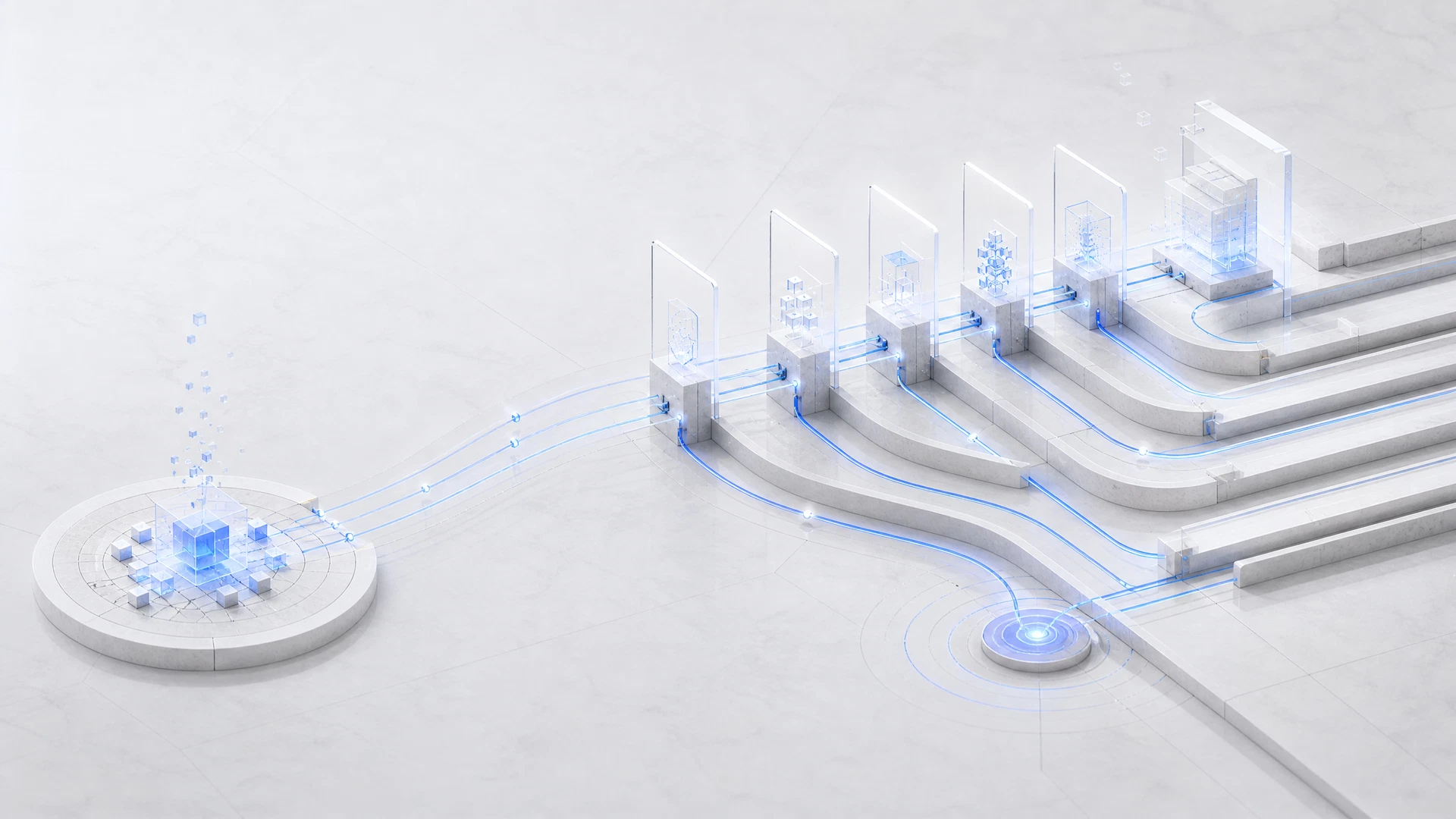
THE DECISION PATH
Agentic Enterprise / operating model- 01Workflow
- 02Context
- 03Control
- 04Evidence
# Today's Insight — Agentforce + MCP: A clear architecture and an executable decision for 90 days
Enterprises that are ready to move from experimentation to measurable business outcomes with agentic AI need to solve two problems at once: (1) map and deliver the right signals to agents running in production, and (2) choose an integration architecture that preserves control, observability, and scale. The primary-source dossier in this Insight — Salesforce’s Agentforce product pages and the Model Context Protocol (MCP) architecture documentation — points to a concrete, low-risk path: run a 90-day Agentforce pilot that uses MCP-compliant context servers so teams can control data flows, enforce governance, and accelerate iteration.
Why this is a current, concrete decision
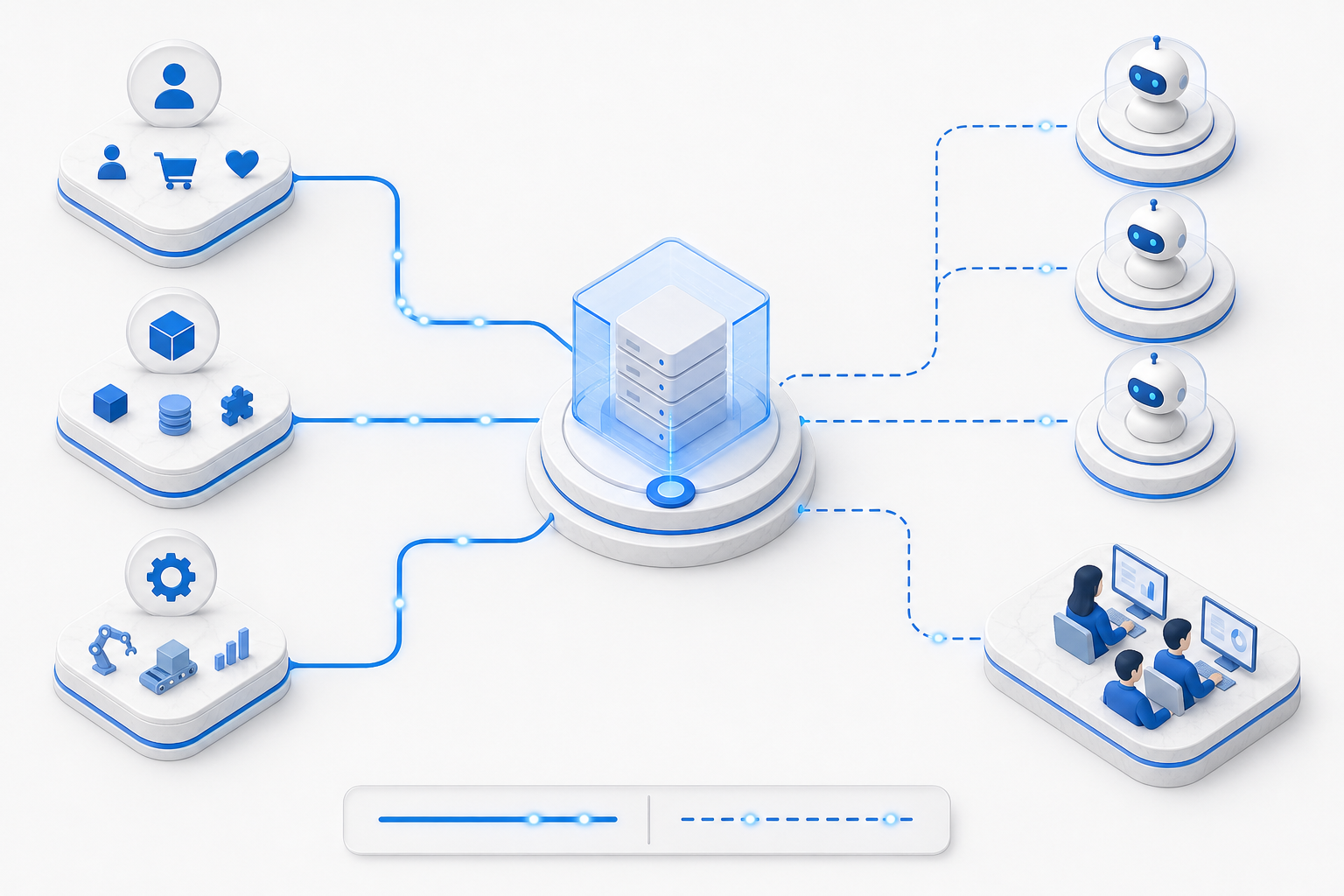
Salesforce positions Agentforce as a platform that mixes humans and agents across sales, service, and other business workflows, offering builder tools, voice, developer toolkits, and an AgentExchange for partner agents. The MCP architecture describes a client-server protocol specifically designed to provide contextual data, discovery, and notifications to AI applications via two transport models (stdio for local servers and Streamable HTTP for remote servers), and it recommends OAuth for authentication. Combining these two sources yields a clear implementation choice for enterprises: use MCP-capable context servers as the secure, versioned conduit between your enterprise systems of record and Agentforce agents.
This is an engineering- and governance-first decision that removes a lot of ambiguity around where context lives, how it is discovered, and how tools are executed — all necessary to move from demos to operational agents.
The Headless 360 operating-model point of view
Headless 360 recommends a Signal Cartography approach: treat every piece of customer, product, and operational data that an agent may need as a signal to be mapped, classified, and routed through an MCP server. That server becomes the policy enforcement and observability layer for agents. Signals should be labeled by sensitivity (local-only, internal, or external), TTL, and required audit trail. For sensitive or regulated signals, run MCP servers locally using stdio transport so context never traverses external networks; for broadly available context or partner integrations, use Streamable HTTP with OAuth tokens and strict scopes. Design teams around signal owners, an MCP platform engineer, and an Agentforce integration owner to ensure rapid iteration with clearly assigned accountability.
A 90-day executable plan (decision for CDO/CTO/Head of AI)
Goal: Deliver two production agent workflows (one service contact-center assist agent; one sales follow-up agent) integrated with Agentforce and governed via MCP context servers.
Week 0–2: Planning and signal cartography
- Inventory top 8 signals the pilot agents need (CRM record, recent orders, SLA logs, knowledge articles, recent chats, billing status, authentication status, call metadata). Do not move data yet.
- Classify each signal by sensitivity and access pattern; designate owners.
Week 3–6: Platform and MCP deployment
- Deploy an MCP server for local, sensitive signals (stdio-capable) and configure a remote MCP server (Streamable HTTP) for shared signals and partner connectors. Use OAuth tokens for Streamable HTTP authorization as recommended in the MCP architecture.
- Implement discovery and resource endpoints so Agentforce clients can query available tools, prompts, and resources via MCP discovery primitives.
- Instrument logging, notifications, and audit trails within the MCP servers to capture tool execution requests and responses.
Week 7–10: Agentforce integration and iterative tests
- Use Agentforce Builder and Agentforce Dev Tools to assemble the two agent workflows, wiring MCP discovery to retrieve context and tools at runtime.
- Implement human-in-the-loop gates for decision points that the business wants to retain control over (e.g., payment adjustments, contract approvals).
- Run closed pilot traffic (internal users only) and validate observability, latency, and data boundary enforcement.
Week 11–12: Launch and measure
- Gradually roll the service assist agent into production for a small set of customer segments; keep sales follow-up in a staged A/B experiment.
- Measure business outcomes mapped to the signals (time-to-resolution, follow-up conversion rate, number of escalations) and technical outcomes (MCP latency, tool execution success rate, audit completeness).
- Decide: scale, extend, or rollback based on measurable thresholds defined in Week 0–2.
Engineering decisions you must take now
- Transport choice per signal: use stdio-hosted MCP servers for sensitive on-premise signals; use Streamable HTTP with OAuth for SaaS and partner connectors. (MCP explicitly supports both transports and recommends OAuth for remote servers.)
- Discovery-first integration: require every Agentforce agent design to call MCP discovery before execution so you can evolve tools and prompts without redeploying agents.
- Notifications and progress: enable MCP notifications so agents and the platform can subscribe to state changes (important for long-running flows like order remediation).
- Versioning and compatibility: adopt MCP versioning model in your deployment to ensure client/server upgrades do not break running agents.
Governance and risk controls
- Policy-as-code at the MCP layer: enforce redaction, TTLs, and allowed tools per user role before context is provided to Agentforce agents.
- Human-in-loop defaults for high-risk actions: require explicit human approval handoffs for anything that materially alters customer contracts or finances.
- Monitoring and audit: centralize audit logs from MCP servers and Agentforce tool execution; define an incident playbook for misuse, drift, or data leakage.
Expected operator roles (minimal team)
- MCP Platform Engineer: deploys and maintains MCP servers, implements discovery/resource endpoints.
- Agentforce Integration Owner: builds agents and maps Agentforce flows to MCP signals, runs the pilot backlog.
- Signal Owners (2–4 business SMEs): validate signal semantics, approve redaction and access rules.
- Compliance / Security reviewer: certifies the pilot for data handling and approves go/no-go for production expansion.
Metrics to judge the decision
- Technical: 95th-percentile MCP discovery+context latency under acceptable threshold (define based on contact-center SLAs), tool execution success rate, and complete audit coverage for 100% of high-sensitivity signals.
- Business: measurable reduction in average handle time for the service pilot and meet-or-exceed baseline conversion metrics for the sales follow-up test.
Concise FAQ
Q: Why use MCP at all instead of direct API calls?
A: MCP standardizes discovery, resource types, and notifications so agents can run against a stable contract; it centralizes policy enforcement and observability at the context layer.
Q: Which transport should I pick for on-prem CRM data?
A: Use a local MCP server with stdio transport for the tightest control — the MCP architecture supports stdio for local servers that serve a single client.
Q: Can Agentforce work without MCP?
A: Yes — Agentforce can integrate with many back-end systems — but MCP gives you a repeatable, versioned, and auditable way to provide context to agents at scale.
Q: How do we avoid model drift and unsafe actions?
A: Put human-in-loop gates at business-critical decision points and log all tool executions and responses through MCP for periodic review.
References
- https://www.salesforce.com/agentforce/mcp-support/
- https://modelcontextprotocol.io/docs/learn/architecture
HEADLESS 360 OPPORTUNITY SESSION
Bring one workflow.
Leave with a clearer move.
KEEP READING