
Agentic Enterprise / HEADLESS 360
Adopt MCP Now: A Practical Integration Decision for Headless 360 + Agentforce
A concrete two-phase decision for CTOs: adopt the Model Context Protocol (MCP) as the enterprise context-exchange standard and map Headless 360 / Agentforce artifacts to MCP primitives to accelerate safe, operable agent deployments.
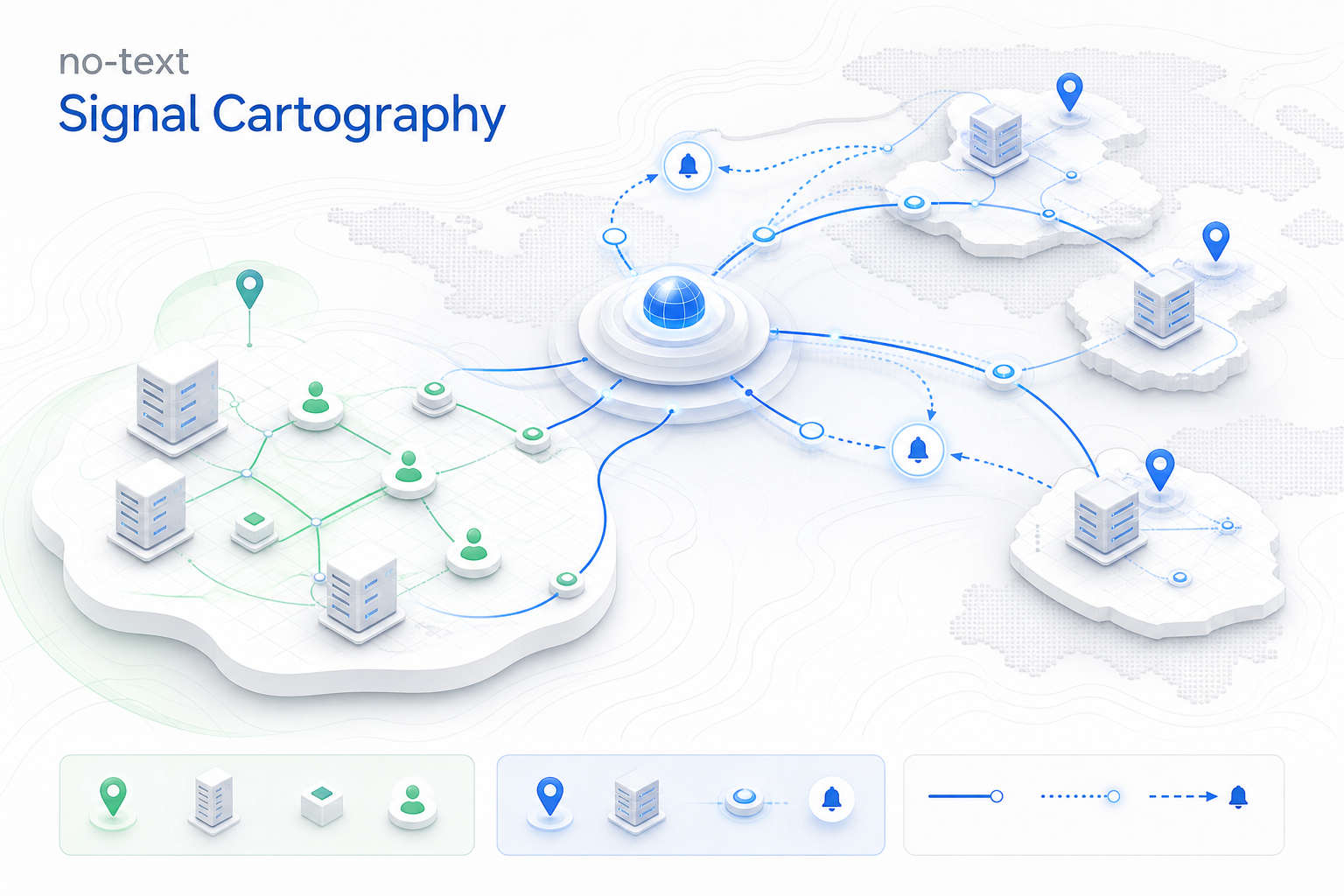
THE DECISION PATH
Agentic Enterprise / operating model- 01Workflow
- 02Context
- 03Control
- 04Evidence
# Why your enterprise should treat MCP as the integration standard for Agentforce + Headless 360
Enterprises that are moving beyond proofs-of-concept for agentic AI face a practical integration problem: how to supply reliable, discoverable context to multiple AI hosts and agent runtimes while keeping control of transport, authentication, and real-time updates. The Model Context Protocol (MCP) and Salesforce’s Headless 360 / Agentforce stack, taken together, offer a practical path for that decision.
This Insight synthesizes the primary documentation and product pages in the supplied dossier and translates them into a concrete decision for enterprise technology leaders: adopt MCP as your internal context-exchange standard, and map Headless 360 + Agentforce components to MCP primitives as part of a two-phase rollout (pilot then production). The recommendation is narrowly scoped to integration architecture and operational model — not vendor lock-in or procurement.
What the sources say (short)
- Salesforce’s Agentforce / Headless 360 product pages position Headless 360 as the platform to "build and customize your Agentforce and Customer 360" capabilities, and list Agentforce subproducts (Builder, Voice, Dev Tools, AgentExchange, Operations) that will need reliable context flows. (Salesforce Agentforce MCP support).
- The Model Context Protocol documentation (version listed 2026-07-28) defines a simple, implementable client–server model: a host creates MCP clients that connect to MCP servers; the data layer uses JSON-RPC 2.0 primitives (discovery, tools, resources, prompts, notifications); the transport layer supports two concrete transports — stdio for local, low-latency integrations, and Streamable HTTP for remote servers with standard HTTP authentication. MCP explicitly separates the data layer (primitives) from transport concerns. (Model Context Protocol — Architecture overview).
- Salesforce’s News Explorer shows a recent cadence of Agentic Enterprise content (examples dated Aug–Sep 2026) that signals a product focus on operationalizing agents and turning data into decisions — reinforcing that integration and context plumbing are now a near-term engineering problem, not a distant research topic. (Salesforce News Explorer).
The concrete decision (two-phase): adopt MCP and map Headless 360 artifacts now
1) Pilot (60–90 days):
- Stand up a local MCP server for a single critical flow (e.g., employee agent or a high-value contact-center agent). Use stdio transport for the initially co-located runtime to minimize network variables.
- Map Headless 360 artifacts to MCP primitives: treat agent actions and external APIs as MCP "tools," Customer 360 records and computed views as MCP "resources," and Slack/Voice templates as MCP "prompts." Implement discovery and tool-list notifications so agents can detect capabilities at runtime.
- Validate governance controls: token exchange, audit logging, and notifications for resource changes. Measure latency, error modes, and operational overhead.
2) Production ramp (3–9 months):
- For multi-tenant or distributed components, move to Streamable HTTP transport with OAuth or bearer tokens as recommended by MCP. Use remote MCP servers only after hardened auth and monitoring are in place.
- Expand the MCP server catalogue to include domain-specific servers (CRM read-only context, transactional tools, compliance resources). Use MCP notifications to drive operational intelligence feeds into Headless 360 dashboards.
- Standardize a discovery procedure: every new agent or third-party integration must expose an MCP discovery endpoint and a capability manifest before deployment.
This two-phase choice gives product teams a short, low-risk path to prove the integration model and a scalable blueprint for production.
Why this is the least-regret choice right now
- MCP is explicitly designed to separate the "what" (data-layer primitives: discovery, tools, resources, notifications) from the "how" (transport), which aligns with Headless 360’s goal of composing Agentforce capabilities across diverse runtimes. Using MCP reduces brittle point-to-point plumbing.
- The stdio vs Streamable HTTP transport split gives a concrete migration path: local pilots can run fast and private; production can adopt remote, authenticated transports without changing the protocol semantics.
- Mapping Headless 360 artifacts to MCP primitives creates a consistent developer contract for new agent capabilities, simplifying onboarding of AgentExchange components and internal microservices.
Implementation checklist (operationally specific)
- Define the pilot scope (one agent type, one MCP server) and success criteria (latency < X ms, discovery/registration success, audit trail present).
- Implement MCP discovery and a minimal tool/resource manifest for Headless 360 artifacts.
- Configure stdio transport for co-located runtimes or Streamable HTTP for remote servers; enforce OAuth/bearer token flows for remote servers.
- Instrument notifications: resource-change notifications must feed into your operations view (Headless 360 dashboards) for alerting and capacity planning.
- Create a compliance playbook: who can create MCP tools/resources, how sensitive fields are redacted, and how to revoke access.
Headless 360 operating-model point of view
Headless 360 treats integration as an operational contract, not a project: the platform expects many heterogeneous agent components (Agentforce builder artifacts, voice connectors, exchange apps) to be discoverable and to exchange context at runtime. MCP provides the contract Headless 360 needs: a small set of primitives, a discovery handshake, and notification semantics. Operational teams should own the MCP server catalogue, SLA-backed transports, and the governance policy that controls resource distribution. Product teams should own the manifest definitions (tool/resource/prompt) and unit tests that ensure graceful degradation when a tool is unavailable.
Put simply: give platform engineers MCP servers as a managed service; give product teams concise manifests; measure operational health via notifications and Headless 360 dashboards.
FAQ (concise)
Q: Does adopting MCP force us to use a particular LLM or agent runtime?
A: No. MCP defines context exchange primitives and transports; it does not mandate LLMs or agent implementations.
Q: Which transport should we start with?
A: Start with stdio for local, privacy-sensitive pilots. Use Streamable HTTP with OAuth/bearer tokens for distributed production workloads.
Q: How do we prevent data exfiltration through agent tools?
A: Restrict tool/resource manifests, apply redaction at the MCP server, and audit tool execution. Make revocation paths part of the governance playbook.
Q: Will Headless 360 work with third-party AgentExchange items?
A: Yes — but require MCP discovery manifests from third-party agents before deployment so the platform can enumerate and control capabilities.
References
- https://modelcontextprotocol.io/docs/learn/architecture
- https://www.salesforce.com/agentforce/mcp-support/
- https://www.salesforce.com/news/stories/
HEADLESS 360 OPPORTUNITY SESSION
Bring one workflow.
Leave with a clearer move.
KEEP READING


