
Agentic Enterprise / HEADLESS 360
Adopt Agentforce + MCP: A 90-Day Pilot Decision for Enterprise Agent Governance
A decision-focused 90-day pilot plan recommending Agentforce + MCP as the enterprise agent gateway, with checklist, risks, and Headless 360 operating-model POV.
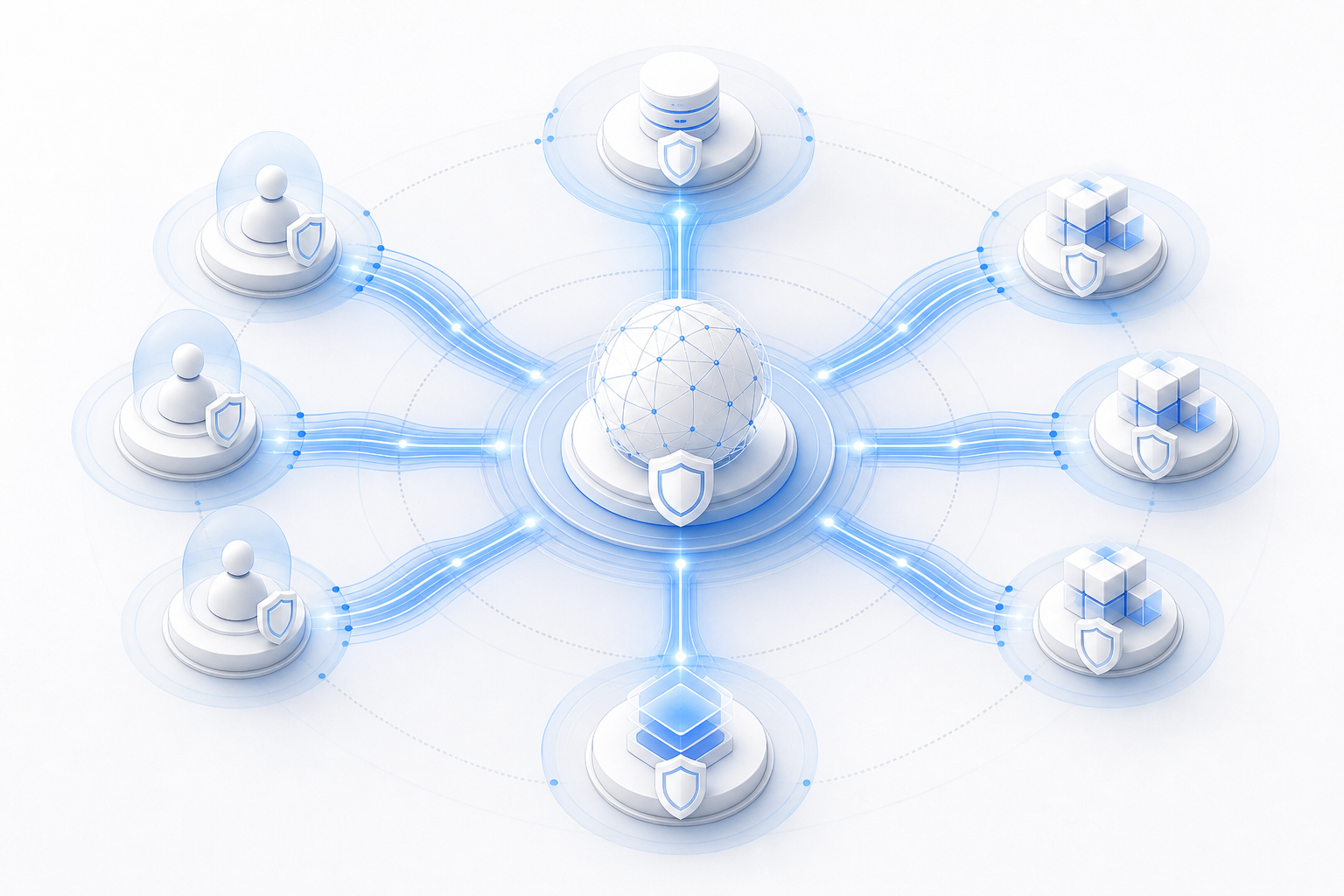
THE DECISION PATH
Agentic Enterprise / operating model- 01Workflow
- 02Context
- 03Control
- 04Evidence
# Decision Insight: Adopt Agentforce + MCP as your enterprise agent gateway
Executive summary
Salesforce's Agentforce positions itself as an enterprise-grade agent gateway that leverages the Model Context Protocol (MCP) to connect AI agents to tools, data, and prompts across internal and external systems. For an enterprise evaluating how to move from point integrations to an orchestrated agent platform, the immediate decision is whether to standardize on an MCP-based gateway (Agentforce) to accelerate safe, governed agent deployments across lines of business. (salesforce.com)
Why this is a near-term decision
Recent Salesforce coverage and product materials indicate an industry push toward "agentic" architectures and marketplaces for interoperable agent capabilities; enterprises that treat agent interoperability as a platform-level concern reduce bespoke integration work and improve governance continuity. The Salesforce news index highlights how agent deployments and agentic enterprise topics are becoming central to enterprise AI conversations in September 2026. (salesforce.com)
Conservative decision to make today (concrete):
- Approve a 90-day pilot to implement Agentforce as the enterprise MCP client and register three mission-critical MCP servers (CRM-adjacent data store, shipping/fulfillment resource, and a partner billing tool) in a centralized MCP server registry. Use a single product procurement (Agentforce + AgentExchange partner connectors) rather than authoring bespoke adapters for each system.
This decision narrows scope, minimizes integration work, and produces a governance artifact (the registry) that can be operationalized across the organization.
Why Agentforce + MCP fits enterprise constraints
- Open interchange standard: MCP defines a JSON-RPC data-layer protocol and two transport options (stdio for local, streamable HTTP for remote), which lets enterprises choose hosting and security models appropriate to sensitive systems. Using MCP avoids locking integrations into a single proprietary connector model. (modelcontextprotocol.io)
- Registry and governance controls: Agentforce provides a centralized MCP server registry, granular authentication, rate-limiting, and policy enforcement surfaces aimed at keeping agent actions within enterprise guardrails. These operational controls convert a set of ad-hoc integrations into governed services. (salesforce.com)
- Marketplace and reuse: AgentExchange cataloging reduces bespoke build work by giving curated MCP partner services that can be discovered and deployed as MCP servers for agents to use. That improves speed-to-value in the pilot phase without compromising enterprise security models. (salesforce.com)
Headless 360 operating-model point of view
Headless 360 recommends treating Agentforce as a platform boundary: Agentforce should be the enterprise MCP client that enforces policy, observability, and lifecycle for all agent interactions. Operationally, this means:
- Platform team owns the registry and onboarding workflow (vetting, authentication, rate limits).
- Lines of business request capabilities by requesting MCP server entries rather than asking for bespoke integrations.
- Security and compliance approve MCP server scopes and token issuances centrally.
This approach turns agentic capabilities into a governed platform product with SLAs and predictable operational costs, rather than a series of fragile point integrations.
Concrete implementation checklist (90-day pilot)
- Governance & policy (Week 1–2)
- - Define permitted actions for agent tooling, data access boundaries, and emergency off-ramps. Configure policy enforcement for each MCP server registration. (salesforce.com)
- Registry & discovery (Week 2–4)
- - Stand up the centralized MCP server registry in Agentforce; catalog initial partner MCP servers via AgentExchange. Validate discovery and capability advertisement. (salesforce.com)
- Security & transport (Week 3–6)
- - Select transport model per MCP server (stdio for local services, streamable HTTP for remote). Establish OAuth/bearer token flows and scoped credentials. Run penetration testing on MCP server client-server handshake. (modelcontextprotocol.io)
- Pilot workload (Week 5–10)
- - Deploy 3 pilot MCP servers (CRM data read-only, logistics ETA resource, partner billing tool). Create agent flows that demonstrate combined cross-system actions (lookup, recommend, authorize). Measure latency, error handling, and rate-limit behavior. (salesforce.com)
- Observability & ops (Week 8–12)
- - Instrument audit trails for tool calls, prompts, and resource fetches. Ensure policy violations trigger alerts and can be rolled back. Define runbook for throttling and circuit-breakers. (salesforce.com)
Operational risks and mitigations
- Risk: Overbroad agent capabilities. Mitigation: Enforce scoped MCP server permissions and granular action whitelists at registry onboarding. (salesforce.com)
- Risk: Resource overload. Mitigation: Implement intelligent rate-limiting and capacity planning per Agentforce guidance. (salesforce.com)
- Risk: Transport and credential complexity. Mitigation: Standardize on streamable HTTP + OAuth for remote services and use local stdio only for tightly controlled on-prem components; build a credential rotation policy. (modelcontextprotocol.io)
Measuring pilot success (KPIs)
- Time-to-launch for a new MCP server (target: < 10 business days to register, secure, and validate)
- Number of bespoke integrations avoided (target: 3 integrations replaced in pilot)
- Governance incidents (target: zero production policy violations during pilot)
FAQ (concise)
Q: What is MCP and why not use plain APIs?
A: MCP is an open protocol that standardizes discovery, tools, resources, and prompts for AI agents and supports two transports. It reduces bespoke integration work and enables richer interoperability patterns that plain API point-integration strategies do not provide. (modelcontextprotocol.io)
Q: How does Agentforce enforce security?
A: Agentforce proposes a centralized registry, granular auth, and policy enforcement surfaces (including rate limiting) so organizations can control what agent capabilities are discoverable and usable. (salesforce.com)
Q: Can we use existing microservices as MCP servers?
A: Yes — MCP is transport-agnostic and can represent existing services as MCP servers (subject to a compatible transport wrapper and capability description). The MCP architecture supports local and remote transports. (modelcontextprotocol.io)
Q: Where do I find vetted MCP services?
A: Salesforce’s AgentExchange is presented as a curated catalog where enterprises can discover partner MCP servers ready for deployment. (salesforce.com)
References
- Salesforce — Agentforce MCP Support: https://www.salesforce.com/agentforce/mcp-support/ (salesforce.com)
- Model Context Protocol — Architecture overview: https://modelcontextprotocol.io/docs/learn/architecture (modelcontextprotocol.io)
- Salesforce — News & Stories index (agentic enterprise context): https://www.salesforce.com/news/stories/ (salesforce.com)
Headless 360 short conclusion
If your organization needs to scale agent-driven capabilities across multiple business systems without multiplying bespoke adapters, approve the 90-day Agentforce + MCP pilot now. The pilot creates a governed registry, proves discovery and security controls, and lets you measure the real operational overhead before wider rollout — turning an experimental AI surface into a sustainable platform product.
HEADLESS 360 OPPORTUNITY SESSION
Bring one workflow.
Leave with a clearer move.
KEEP READING


